台灣海灘指南:何時游泳、哪裡衝浪以及充滿夏日魔力的節日慶典

The first time someone tells you about Taiwan beach life, you probably picture a Thailand-style stretch of white sand with a coconut in your hand. Cancel that picture. Taiwan’s coastline is wilder, weirder, and far more interesting than the postcard: black volcanic sand on the east, candy-blue water in the Penghu archipelago, gnarly surf in Yilan, coral-rimmed bays in Xiaoliuqiu, and night markets close enough to the shore that you can rinse off the salt and be eating squid skewers thirty minutes later.

This is a no-fluff Taiwan beach planner — when to swim, where to surf, what each coast actually feels like, the summer festivals that are running right now, and the safety stuff nobody tells you until it’s too late. It’s the guide we wished existed before our first Fulong sunburn.

The Honest Truth About a Taiwan Beach Trip

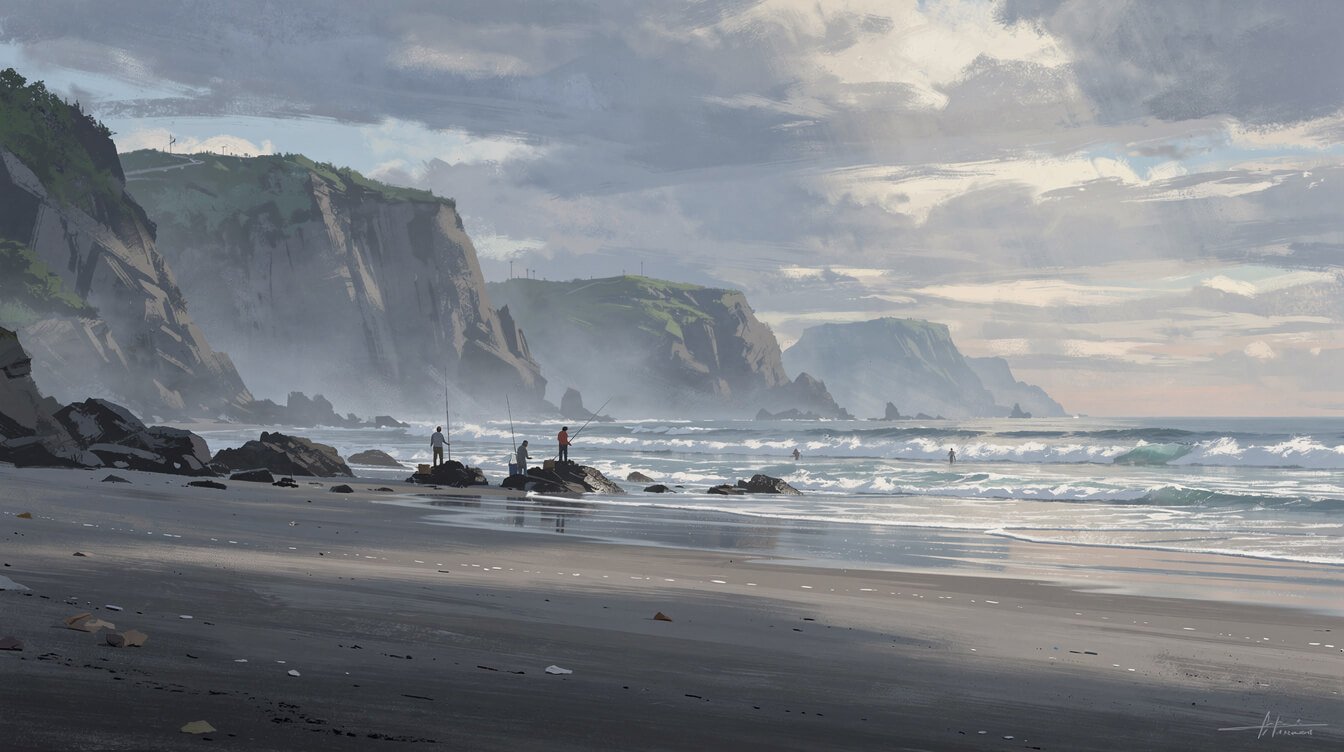
taiwan beach east coast wide view at golden hour

Taiwan is an island wrapped in 1,566 kilometres of coastline, but only a fraction of it is what most travellers would call a “swim beach.” The west coast, where most cities sit, is shallow, muddy, and dotted with aquaculture ponds — beautiful at sunset, but you would not swim there. The east coast is dramatic and rocky, with steep drop-offs, black sand, and Pacific swell that ranges from glassy to terrifying depending on the week. The truly tropical sand-and-snorkel water lives in the south (Kenting) and on the offshore islands (Penghu, Xiaoliuqiu, Green Island).

That mix is exactly why a single “best beach in Taiwan” list is misleading. The best beach for surfing is not the best beach for kids. The best beach for a Saturday morning MRT trip from Taipei is not the same as the best beach for a long beach-bag weekend. So instead of ranking them 1 through 20, we will sort by what you actually want to do — and by what you can pull off on the dates you have available.

Two more honest facts before we get into specifics. First, Taiwan has a real surf scene, not a marketing-brochure one. Wai’ao in Yilan, Jinzun in Taitung, and Nanwan in Kenting all hold legitimate competitive contests every year. Second, Taiwan also has a real beach community — surf schools, beach yoga, sand sculpture artists, and food trucks parked at the edge of the dunes. Once you stop expecting Bali and start meeting Taiwan on its own terms, the coastline absolutely delivers.

When to Swim at a Taiwan Beach: A Month-by-Month Calendar

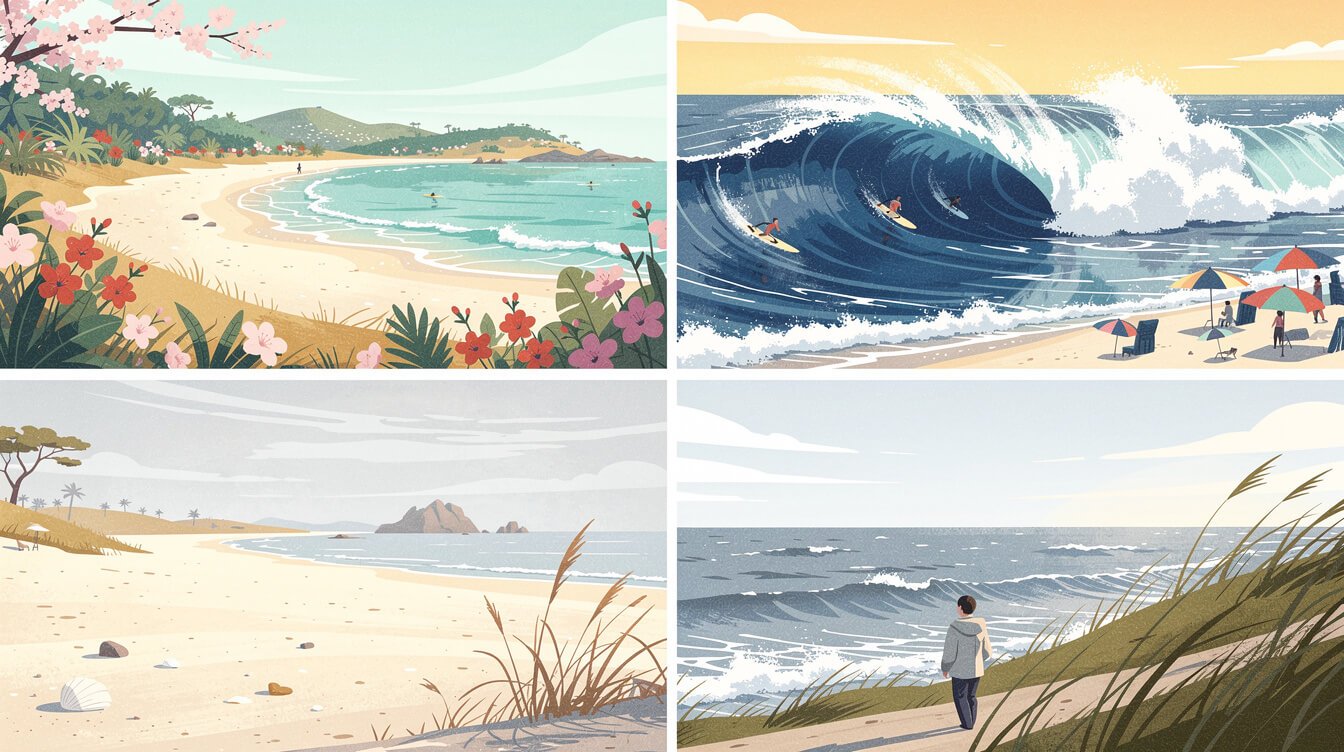
seasonal Taiwan beach calendar four-panel collage

Picking the right month is the single biggest decision you will make. Taiwan has three weather “voices” on the coast — the cool-but-empty winter, the warm shoulder season, and the hot, busy, occasionally typhoon-haunted summer. Here is how it actually breaks down:

  • March to early May (Spring): Air temperatures climb into the mid-20s C, water is still around 22–23°C — wetsuit weather for most people, perfect for east-coast surfing and southern-island day trips. Crowds are light, hotels are cheap, and the plum-rain front has not arrived yet in early spring.
  • Mid-May to mid-June (Plum Rain):美玉 front parks itself over the island. Expect 5–10 days of muggy drizzle, with sunny breaks between. South-coast and offshore-island beaches are still very swimmable; northern beaches can be moody. This is also the start of the major beach-festival season.
  • Late June to August (Peak Summer): Water hits 28–29°C, air sits at 32–35°C, and beaches fill with locals on weekends. This is also typhoon season — Taiwan averages 3–4 direct or near-direct hits per summer. Plan flexible itineraries.
  • September to October (Best-Kept Secret): Water is still bath-warm at 27°C, school is back in session so weekday beaches empty out, and the typhoons start tapering. If you can only pick one window, this is it.
  • November to February (Winter): Northern beaches turn raw and gusty — surfers love it, swimmers hate it. South Taiwan and Kenting stay mild (water around 22°C, air 22–25°C), so a winter Kenting weekend is genuinely pleasant. If you’re tracking weather windows broadly, our month-by-month guide to travelling in Taiwan goes deeper on the seasonal nuance.

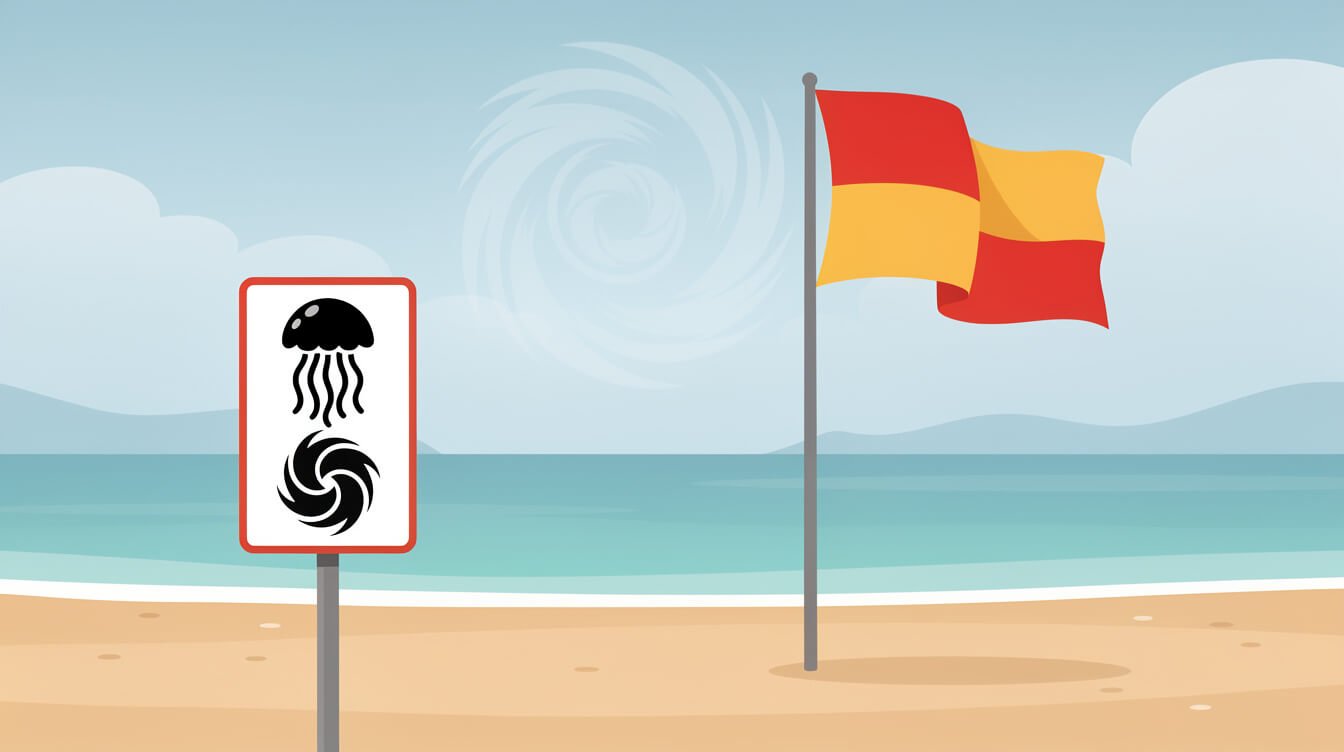
One last note on jellyfish: blooms appear most often in late July and August, especially on the north coast around Fulong and Bali. Local lifeguards post sign boards — if the jellyfish sign is up, take it seriously and stay out of the water that day.

Best Taiwan Beaches by Activity: Surf, Swim, Snorkel, and Scenic

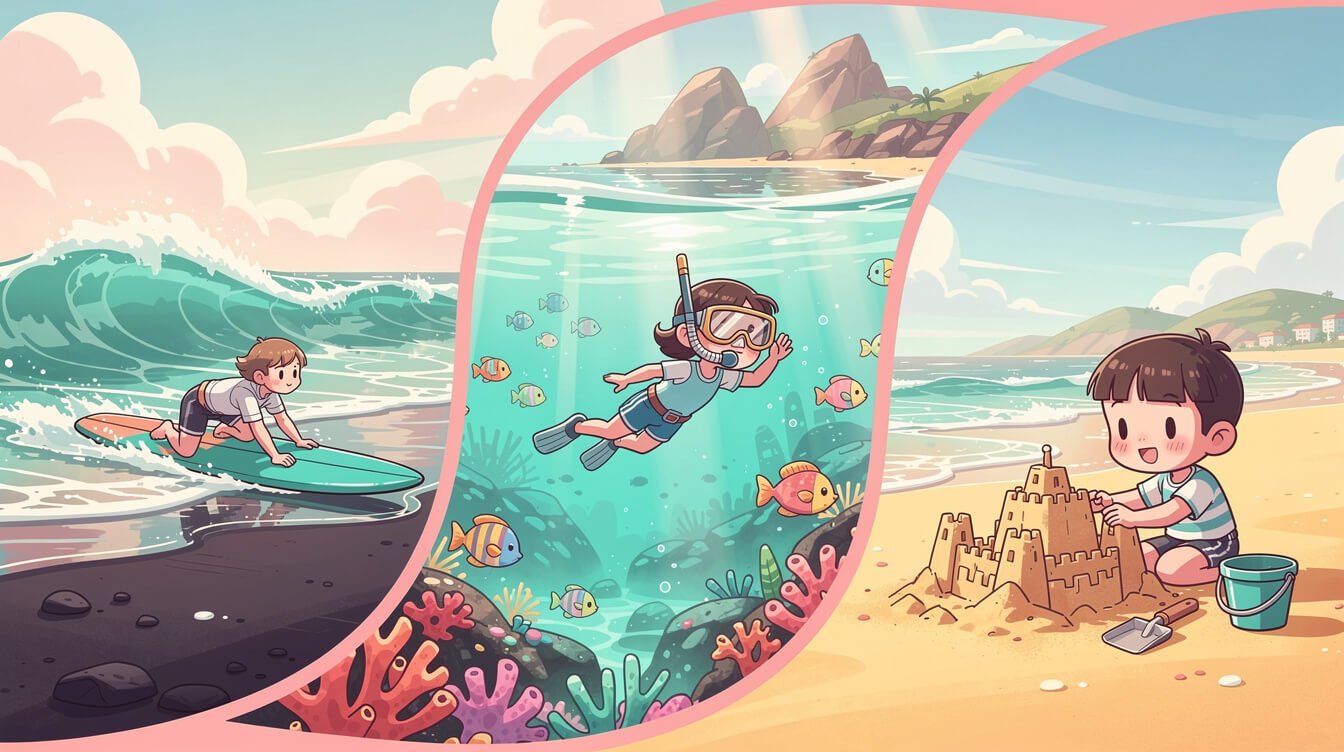
surfer snorkeler and sandcastle scene Taiwan beach

Different beaches are good at different jobs. Here is the cheat sheet we mentally use when friends ask us to plan their day.

For Surfing

Wai’ao Beach (外澳沙灘), Yilan is the classic Taiwan learn-to-surf spot — a long sandy crescent with soft beach break, board rentals at every shack, and a train station within walking distance. Jinzun Harbour (金樽漁港), Taitung hosts the Taiwan International Surfing Open every November and pulls in pros from across Asia. Nanwan (南灣), Kenting is the south-coast all-rounder — gentle in summer, punchier when winter swell wraps in.

For Easy Swimming

Baishawan (白沙灣), New Taipei is the closest “real” sand beach to Taipei (just over an hour by car or bus from the city). The water is calm, lifeguards are on duty in season, and there is an outdoor shower block. Fulong (福隆海水浴場), New Taipei is the bigger sibling — a 3-kilometre stretch of sand, accessible by direct train from Taipei in about ninety minutes, and famous for its biandang (railway bento) sold on the platform. Cijin Beach (旗津), Kaohsiung is a quick ferry ride from downtown Kaohsiung and has the closest thing Taiwan has to a boardwalk vibe.

For Snorkelling and Diving

Xiaoliuqiu (小琉球) is the only coral island in Taiwan you can reach by a 25-minute ferry from Donggang. Sea turtle sightings are routine — locals will tell you it’s “almost embarrassing” how easy they are to spot. 綠島(綠島) offers proper scuba with hot springs underwater hot springs (yes, both). Sail Rock Beach (船帆石), Kenting has a small reef just off the famous sail-shaped rock.

For Scenic Walks (Not Swimming)

Qixingtan Beach (七星潭), Hualien is a curved bay of black and grey pebbles backed by mountains — gorgeous, photogenic, and absolutely 不是 a swim beach (the drop-off is brutal and rip currents are constant). Same goes for Wai’ao at low tide when you can walk the long sandbar all the way to the offshore islet. Bring shoes; bring a camera; do not bring an inflatable flamingo.

Regional Beach Guide: North, East, South, and the Offshore Islands

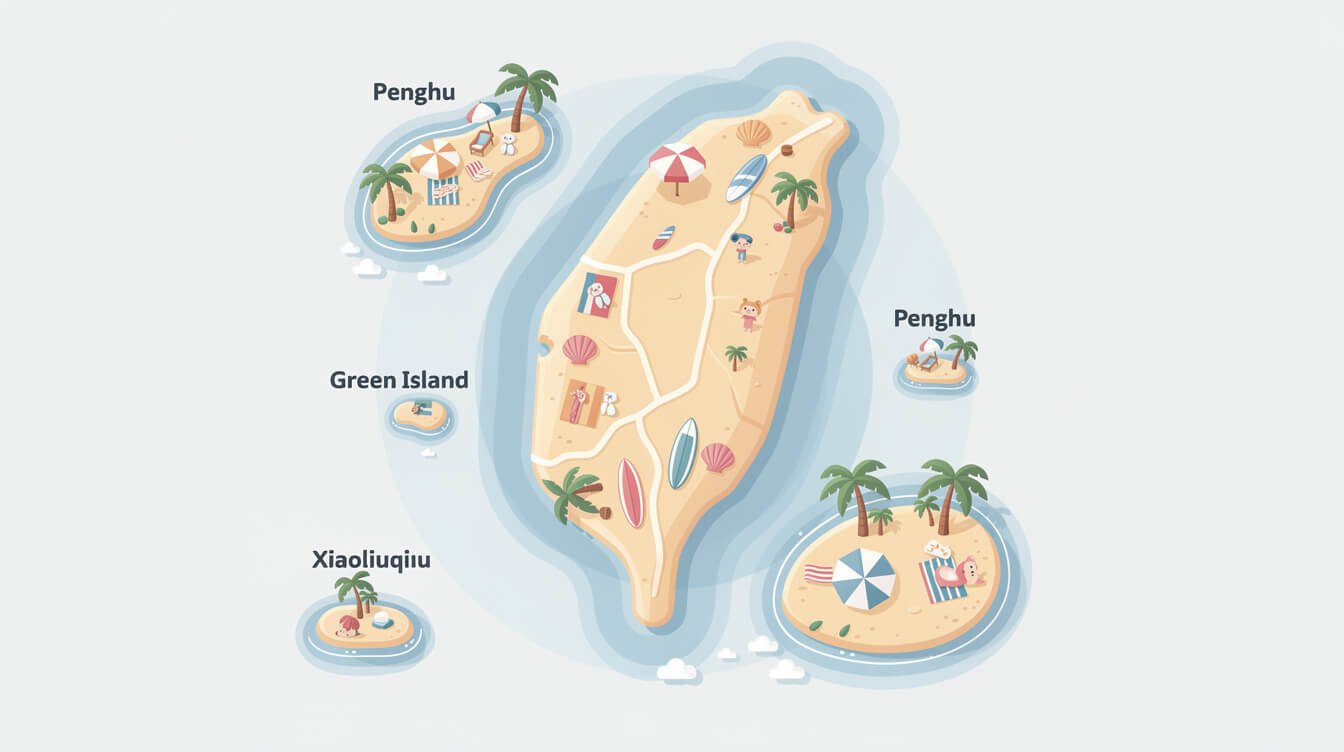
stylized illustrated map of Taiwan beaches by region

The North Coast: Day-Trip Country

Anything within ninety minutes of Taipei counts as the north coast: Baishawan, Qianshuiwan (淺水灣), Shalun (沙崙), Wanli (萬里), Dawulun (大武崙), , 和 Fulong. The vibe is “after-work swim or weekend escape.” Access is unbeatable — most are reachable on the same MRT and bus card you use in the city. If you want to plan a Taipei coast crawl, our things-to-do-in-Taipei guide has the routing dialled in.

The East Coast: Mountains Meeting Pacific

From Yilan all the way down to Taitung, the east coast is where Taiwan’s drama happens. Wai’ao kicks it off with surf culture and seafood shacks. Qixingtan in Hualien is the scenic bay; further south, Shitiping (石梯坪)Taimali Beach (太麻里) in Taitung are quiet, off-the-itinerary spots beloved by Amis communities (the largest Indigenous group in Taiwan — there’s more on them in our Indigenous peoples guide). The Taroko earthquake in April 2024 affected some access roads on this coast, so check current status — our Taroko Gorge 2026 guide tracks what’s open.

The South: Kenting Country

Everything south of Kaohsiung pivots around Kenting National Park, Taiwan’s first national park and the only place on the main island where you’ll find genuinely tropical sand. Baishawan Beach in Kenting (different beach, same name as the one near Taipei) is the swimming postcard. Nanwan is the surf hub. Sail Rock is the snorkel beach. Eluanbi at Taiwan’s southern tip is for lighthouse photos and sunset, not swimming.

The Offshore Islands: The Real Tropical Stuff

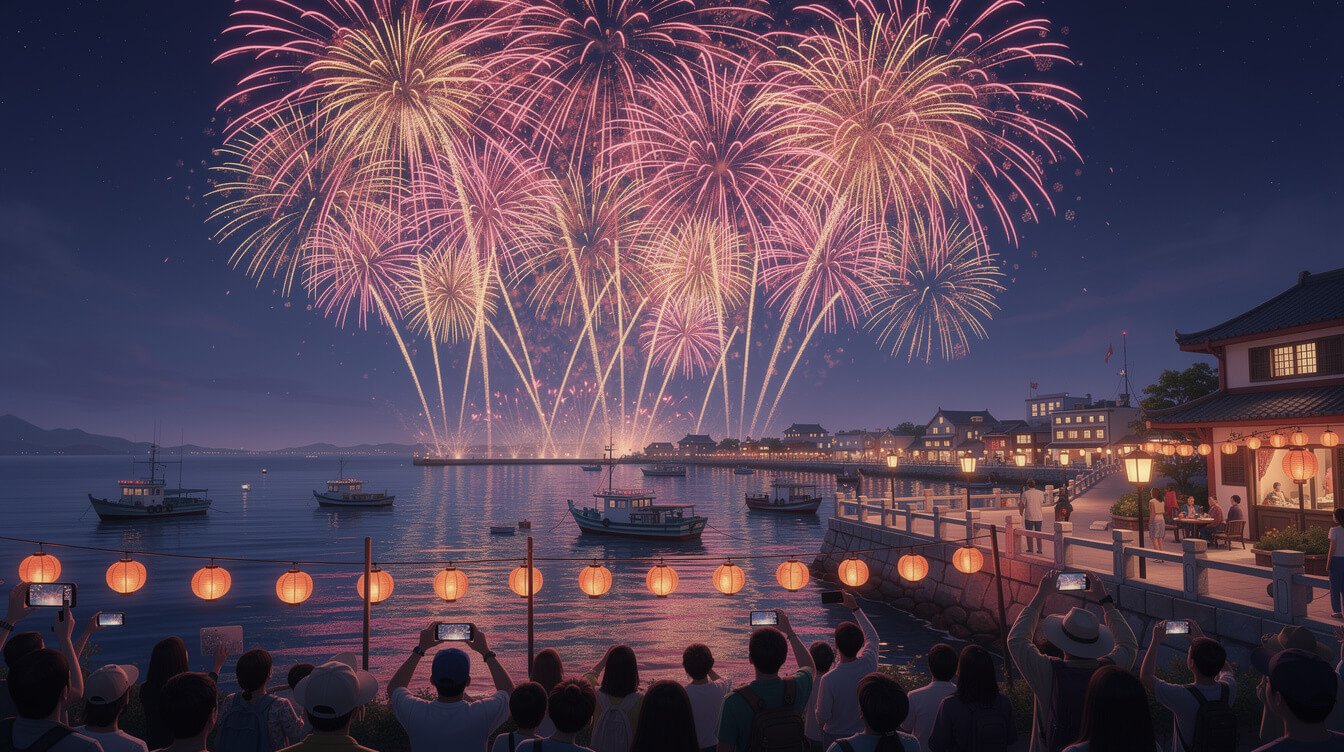
This is where Taiwan finally lives up to the “tropical island” stereotype. Penghu (澎湖) is an archipelago of 64 islands famous for basalt cliffs and the world-famous Penghu Fireworks Festival — we wrote a full Penghu guide if you want to plan a multi-day trip. 小琉球 is the easy turtle island. Green Island is the scuba island. Kinmen and Matsu offer beaches near Taiwan’s historic frontlines — Cihu Beach on Kinmen and Banli Beach on Matsu are remarkably peaceful given the geography.

Summer Beach Festivals: Penghu Fireworks, Fulong Sand Sculpture, and More

Penghu Fireworks Festival at Magong Harbour Taiwan

This is the part most beach guides skip — and it’s the part that makes a Taiwan beach summer unforgettable. The island packs an absurd number of festivals into the May–September window, almost all of them on or near the sand.

  • Penghu International Fireworks Festival (澎湖國際海上花火節): Runs from mid-April through the end of June, with shows on Magong Harbour multiple nights per week. Hotels book out months in advance, so plan ahead or fly in on a non-show weekday.
  • Fulong International Sand Sculpture Art Festival (福隆國際沙雕藝術季): Mid-May through July. Internationally recognised sand artists carve enormous pieces into Fulong’s 3-kilometre beach; the entry fee (around NT$120) is one of the best-value summer outings in Taiwan.
  • Spring Scream (春天吶喊) and Spring Wave (春浪音樂節): Both held at Kenting over a single weekend in early April. Spring Scream is the indie-rock OG (running since 1995); Spring Wave is the bigger commercial sister. The town becomes one giant beach party for three days.
  • White Sand Bay Music Festival (白沙灣音樂祭): Mid-June at New Taipei’s Baishawan — a one-day electronic music event with the Pacific as the backdrop.
  • Penghu Ocean Carnival (澎湖海上花火節 carnival days): Runs alongside the fireworks season with daytime water sports, dragon-boat-style races, and food stalls.
  • Taiwan International Surfing Open (台灣國際衝浪公開賽): November at Jinzun Harbour, Taitung. The pro contest of the year — competitor wave-jumping plus side-stage music.

Honestly, a smart summer plan is to anchor one weekend to a festival and one weekend to a quieter beach so you get both energies. If you’re packing for a festival weekend, the right swimwear matters — our Taiwan Kawaii Flag String Bikini was literally designed for this kind of trip (yes, we’d recommend it even if we didn’t sell it).

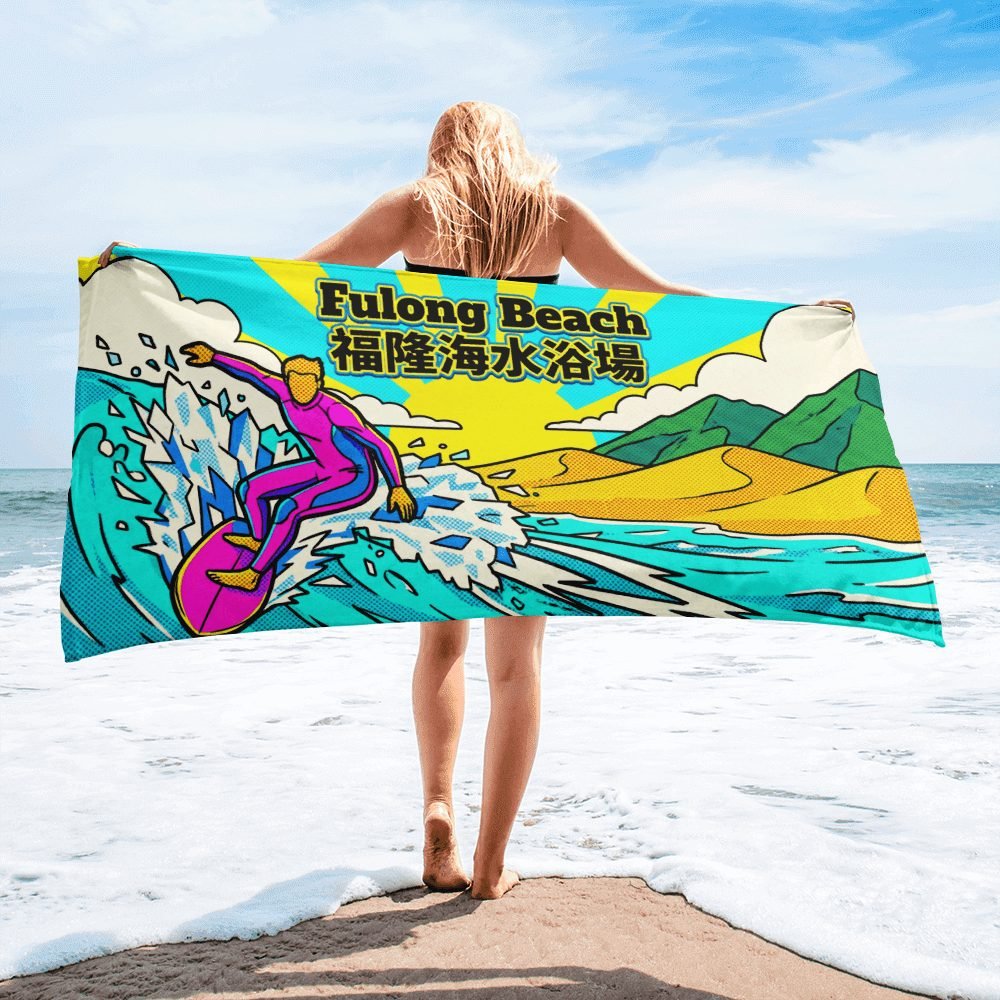
Fulong Beach Taiwan Surf Pop Art Beach Towel

Pack the Beach. Wear the Beach.

Our Fulong Beach Surf Pop-Art towel is sized for two and printed with a retro-comic homage to Taiwan’s most famous swim beach. Perfect for sand-sculpture-festival weekends.

Beach Safety in Taiwan: Jellyfish, Typhoons, and Rip Currents

Taiwan beach lifeguard flag and jellyfish warning sign

Taiwan is one of the safest countries in the world on land, but the ocean has its own rules. Three things to take seriously:

  • Rip currents (離岸流): The east coast is especially prone. Lifeguards mark safe-swim corridors with red-yellow flags. If you get caught in a rip, swim parallel to the shore, not against the pull. Qixingtan, Jinzun, and the Hualien stretches all have signage in Mandarin and English warning of this.
  • Box jellyfish and Portuguese man o’ war: Blooms peak in late July and August on the north coast. If lifeguards put up a jellyfish sign, do not enter the water — Taiwanese box jellyfish stings are no joke and have caused hospital visits in past summers.
  • 颱風: Taiwan averages 3–4 direct or near-miss typhoons per summer. The Central Weather Administration issues land warnings 24 hours ahead; if a warning is up, beaches close, ferries to offshore islands stop running (often for 48 hours after the storm passes), and you should reroute inland. Check the CWA app daily during August.

One quiet hazard: the volcanic black sand on the east coast gets burning hot in summer afternoons. Shoes between car and water are not optional. Bring water shoes, especially for reef beaches like Sail Rock and Xiaoliuqiu where sea urchins live in the shallows.

Finally, lifeguard hours in Taiwan typically run from June through August on official swim beaches; outside those months, swim at your own risk and bring a buddy. Stick to flagged corridors, and you’ll be fine.

Taiwan Beach FAQ: The Questions Everyone Asks

taiwan beach friends at sunset with towel and drinks

Does Taiwan have nice beaches?

Yes — but the definition of “nice” depends on your reference point. If you’re comparing to the Maldives, you’ll be underwhelmed. If you’re comparing to a typical northern European coast, you’ll be ecstatic. Taiwan’s strongest beach assets are its offshore islands (Penghu, Xiaoliuqiu, Green Island) and the south (Kenting). The north and east are good for surfing and dramatic scenery rather than postcard sunbathing.

Can you swim in the ocean in Taiwan?

Yes, on designated swim beaches with lifeguards on duty (typically June through August). Outside flagged beaches and seasons, swimming is technically not banned but is generally discouraged. The water is clean enough — Taiwan’s coastal water quality is regularly tested and published by the Environmental Protection Administration.

Which is the best beach near Taipei?

Fulong wins on combined accessibility, length, and amenities — direct train, lifeguards, food stalls, and the sand-sculpture festival in summer. Baishawan is closer and quieter. Qianshuiwan is the unofficial sunset-watching beach for Taipei locals.

How do you get to Penghu?

By air, in about an hour from Taipei (Songshan) or Kaohsiung — three to four direct flights a day in summer. By sea, ferries run from Budai (Chiayi) in about 90 minutes. Book the fireworks-festival nights weeks ahead.

Are Taiwan beaches good for kids?

The calm, lifeguarded swim beaches absolutely are — Baishawan, Fulong, Cijin, and Kenting’s Baishawan all have shallow entry and supervised water. Avoid the dramatic east-coast pebble beaches (Qixingtan especially) with small children — the drop-off and rip currents make them parental nightmares.

What should I pack for a Taiwan beach day?

Reef-safe sunscreen (Taiwan’s coral is fragile), water shoes for rocky and reef beaches, a wide-brim hat for the brutal summer UV, a quick-dry towel, and a refillable water bottle (most beach towns have 7-Eleven and FamilyMart within a few minutes). If you’re heading to a festival, throw in a portable phone charger — outdoor outlets are scarce.

Final Thoughts: Taiwan’s Coastline Is a Choose-Your-Own-Adventure

If you came here looking for a single number-one Taiwan beach, the honest answer is: the right beach depends on the week you’re visiting, the people you’re with, and what you want to come home with. Surfers will fall hard for Wai’ao. Snorkelers will obsess over Xiaoliuqiu. Festival-chasers will book Penghu and Fulong on repeat. Families will love Baishawan and Cijin. And the Indigenous-led communities along the east coast will quietly out-charm everything else if you’re lucky enough to land there during a summer harvest festival.

Whichever coast you choose, pack for sun and rain (both will happen the same day), check the typhoon and jellyfish notices the morning of, and tip your beach-stall owner — they are some of the kindest people you’ll meet on the island. The water is warm, the noodles are cheap, and the sunset comes for everyone.

訂閱台灣商品資訊

Get Taiwan in Your Inbox

Sign up for the Taiwan Merch newsletter — culture stories, seasonal guides, and first-look access to new designs. One email a week, no spam, easy unsubscribe.

訂閱表格
免費台灣貼紙

免費領取台灣貼紙!

留下您的郵箱,我們將向您發送限量版台灣貼紙——以及搶先了解最新商品發售信息和感受海島風情的機會。.

絕不發送垃圾郵件。隨時可以取消訂閱。.

相關文章

發佈留言

發佈留言必須填寫的電子郵件地址不會公開。 必填欄位標示為 *