Linjiang Night Market (Tonghua), Taipei: What to Eat, When to Go and Its Real Michelin Status in 2026
Most visitors find Linjiang Night Market by accident. They spend the afternoon at Taipei 101, get hungry, and someone says there’s a night market ten minutes’ walk away. That’s how it should be. Linjiang (臨江街夜市), which almost every Taipei local calls Tonghua Night Market (通化夜市), is the night market where people from the neighborhood eat dinner. Tourists come too, but they’re not the reason it exists.
This guide covers what the English-language guides tend to skip as well as the basics. You’ll learn why one market has two names, and how it got started on a plot of land the city had set aside for something else. You’ll also get the walk from the MRT, a practical eat list, and an honest look at Michelin status. Every roundup still mentions the Bib Gourmand stalls here, but none of them are on the current 2026 list. Finally, there are tips on hours, cash and rain, plus how Linjiang compares with Shilin, Raohe and Ningxia.
Linjiang Night Market or Tonghua? One Market, Two Street Names

The two names come from the two streets the market sits on. The market runs along Linjiang Street (臨江街) and crosses Tonghua Street (通化街), forming a rough cross of food stalls in the middle of Da’an District. The official name is Linjiang Street Tourist Night Market (臨江街觀光夜市). Taipei’s Market Administration Office lists it as the Linjiang Street vendor zone, covering Linjiang Street from Tonghua Street to Keelung Road. Locals mostly ignore all that and just say “Tonghua.” If you ask a taxi driver for 通化夜市, you’ll get there faster than if you ask for Linjiang.
Why are the streets called Tonghua and Linjiang?
This is the part almost nobody writes about. After 1945, the new government renamed Taipei’s Japanese-era streets after places in China. Planners roughly matched each Taipei neighborhood to a region of the mainland, so the streets in a given area take their names from the same part of the map. Taipei City’s own gazetteer lists the names in this part of Da’an:
- Tonghua Street, named after Tonghua in the former Andong Province (安東省)
- Linjiang Street, named after Linjiang, also in Andong
- Andong Street, named after the city of Andong in the same province
- Dongfeng Street, named after Dongfeng, also in Andong
Andong was one of the provinces the Republic of China drew in Northeast China after the war. It no longer exists. Today, Tonghua and Linjiang are cities in Jilin Province, near the North Korean border, and Linjiang sits on the Yalu River. So when you eat stinky tofu on Linjiang Street, you’re standing on a street named after a river town in Northeast China, a place with long, freezing winters. It’s the kind of everyday history that turns up all over Taipei once you start reading the street signs.
Which name should you use?
Use both. Search “Linjiang Night Market” on Google Maps to find the official pin, and use “Tonghua” when you’re talking to people. You’ll see both on signs, menus and Taiwanese food blogs, and they mean the same place.
How a Planned Market Site Became a Night Market

Many famous Taiwanese night markets grew up around a temple. Raohe has Ciyou Temple, for example, and Keelung has Dianji Temple (see our Keelung Miaokou Night Market guide). Linjiang has no temple at its heart, and its origin story is more practical.
According to the Taipei City gazetteer, the area was originally set aside for a planned public market, the 坡心市場 (Poxin Market). Around the same time, the city was clearing illegal buildings along Roosevelt Road. The displaced shops and street vendors moved to the half-built streets around Tonghua, and more vendors followed. Over the years, a dinner crowd grew up around them.
The city then made it official, step by step:
- 1986: the city government’s vendor-management task force approved the Linjiang Street vendor zone.
- 1997: the city formally named it Linjiang Street Tourist Night Market.
- 2013: on July 5, the city published the formal notice establishing the zone.
That history explains the market’s character. The gazetteer calls it one of Taipei’s few night markets set inside a residential neighborhood. It describes it as a “commoners’ night market” in an upmarket district, close to both the Xinyi business district and the East District. The people eating here are neighbors and office workers on their way home, not tour groups.
A morning market by day
The same street lives two lives. In the morning, Linjiang is a traditional wet market where local residents buy vegetables, meat and fish. Taipei’s official tourism site and Taiwanese food media both describe this daily switch. As evening comes, shop shutters roll up, the produce stalls in the middle of the street give way to food carts, and the night market takes over. If you’re staying nearby, walk through in the morning too. You’ll see the neighborhood’s kitchen before its dining room.
The two ends of the market feel different as well. Taipei’s tourism office notes that the Keelung Road end leans toward clothing, accessories and household goods, while the food gets denser as you move toward Tonghua Street. If you only have an hour, head straight for the Tonghua Street junction and the alleys around it.
Getting There and Pairing It With Taipei 101

The nearest station is Xinyi Anhe on the red Tamsui–Xinyi Line. Most guides suggest Exit 4. From there it’s about a ten-minute walk through quiet residential lanes to the market. Taipei 101/World Trade Center station is one stop further east on the same line. If you’re coming from the south, Liuzhangli station on the brown Wenhu Line also works. For the full network, see our 台北旅遊攻略.
The Taipei 101 + Linjiang evening
The best thing about Linjiang’s location is how well it pairs with Taipei 101. Here’s a simple plan:
- 傍晚時分: go up Taipei 101 before sunset to watch the city lights come on.
- Around 6:30 PM: take the red line one stop west to Xinyi Anhe, or walk 20 to 25 minutes west along Xinyi Road.
- 7:00 PM: arrive just as the stalls are fully set up and the queues are still short.
- 8:30 PM: finish with dessert and walk back toward the tower for a night photo.
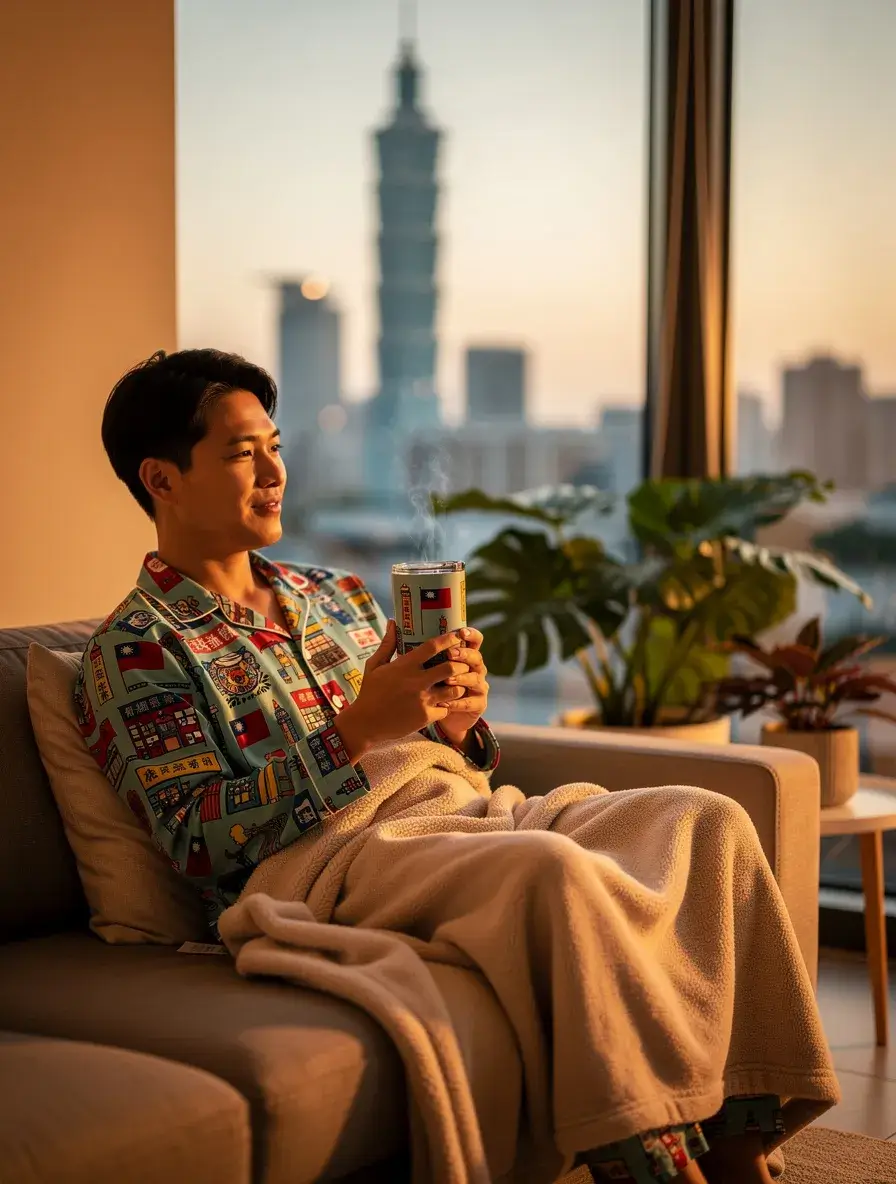
If you have time to spare, keep going a few blocks west on Xinyi Road to the Dunhua South Road junction and Wenchang Street (文昌街). The gazetteer notes it was an old road linking this area to the city before Xinyi Road was built, and it’s still lined with furniture shops. If you want a souvenir of the skyline after your night out, our 我愛台北101台灣做舊印花T卹 is the kind of shirt you’ll actually wear again after the trip.
What to Eat at Linjiang Night Market
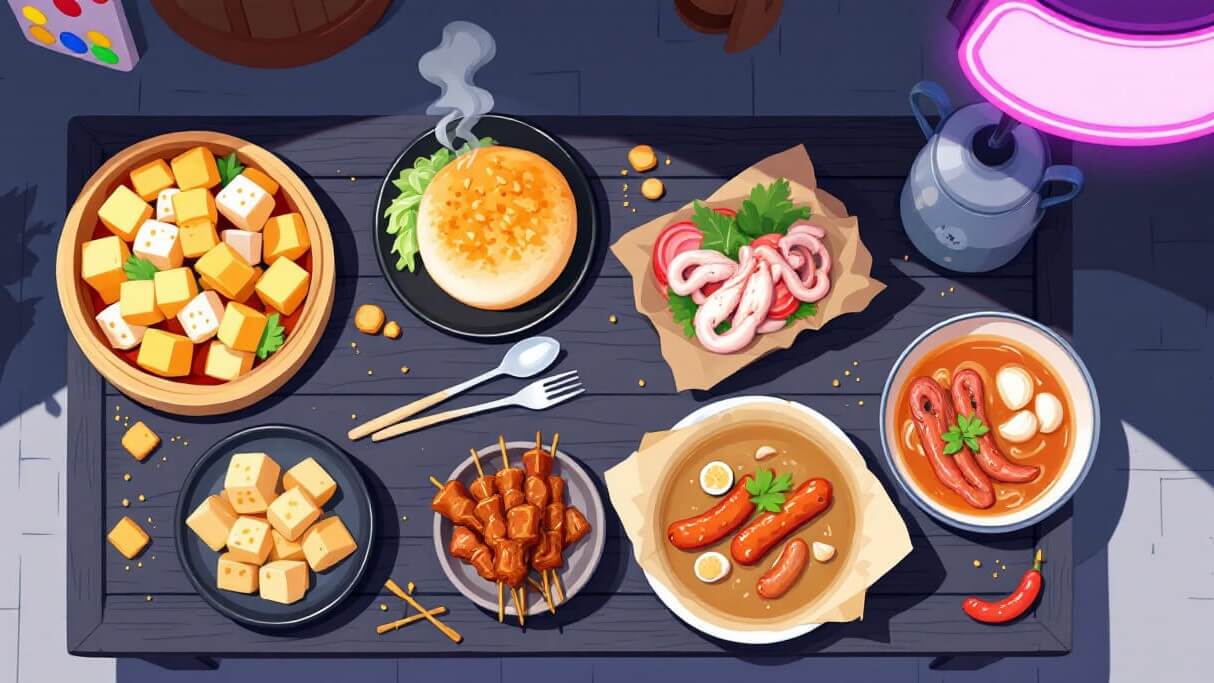
Linjiang isn’t the biggest night market in Taipei, but its food is dense and old-school. Many stalls have been run by the same families for decades. Here’s what to look for, with the Chinese names so you can match them to the stall signs.
The classics
- Yu Pin Yuan Iced and Hot Tangyuan (御品元冰火湯圓): The market’s signature dessert. Hot glutinous rice balls filled with black sesame or peanut sit on shaved ice, topped with sweet fermented rice and osmanthus syrup. Eat them fast, while the outside is still hot and the ice is still cold. Get the mixed bowl to try both fillings.
- Tien Hsiang Stinky Tofu (天香臭豆腐, now signed 雅口): Comes both crispy-fried and in a spicy soup. If you’re new to stinky tofu, start with the fried version. Our stinky tofu explainer covers why it smells the way it does.
- Liang Chi Lu Wei (梁記滷味): Braised-food stall where you pick items from a tray, such as tofu, noodles, greens and offal, and they’re simmered in a soy-based master stock.
- Lo Chi Hsiao Chao (駱記小炒): A wok stall with stools, doing quick stir-fries of beef, lamb, clams and sea snails. It’s the closest thing to a sit-down dinner in the market.
The long-runners the city gazetteer names
Taipei City’s own gazetteer lists these as the market’s well-known snacks. They’re a good checklist because they come from the city’s record, not a ranking site:
- Shih Chia Gua Bao (石家割包): Braised pork belly in a soft folded bun with pickled mustard greens and peanut powder.
- Hu Chi Rice Noodle Soup (胡家米粉湯): Thick rice noodles in pork broth, with side plates of offal and pork cuts called heibai qie (黑白切, “slice of black and white”).
- Tonghua Squid Thick Soup (通化魷魚羹): Squid in a thickened, slightly sweet broth. Add a splash of black vinegar.
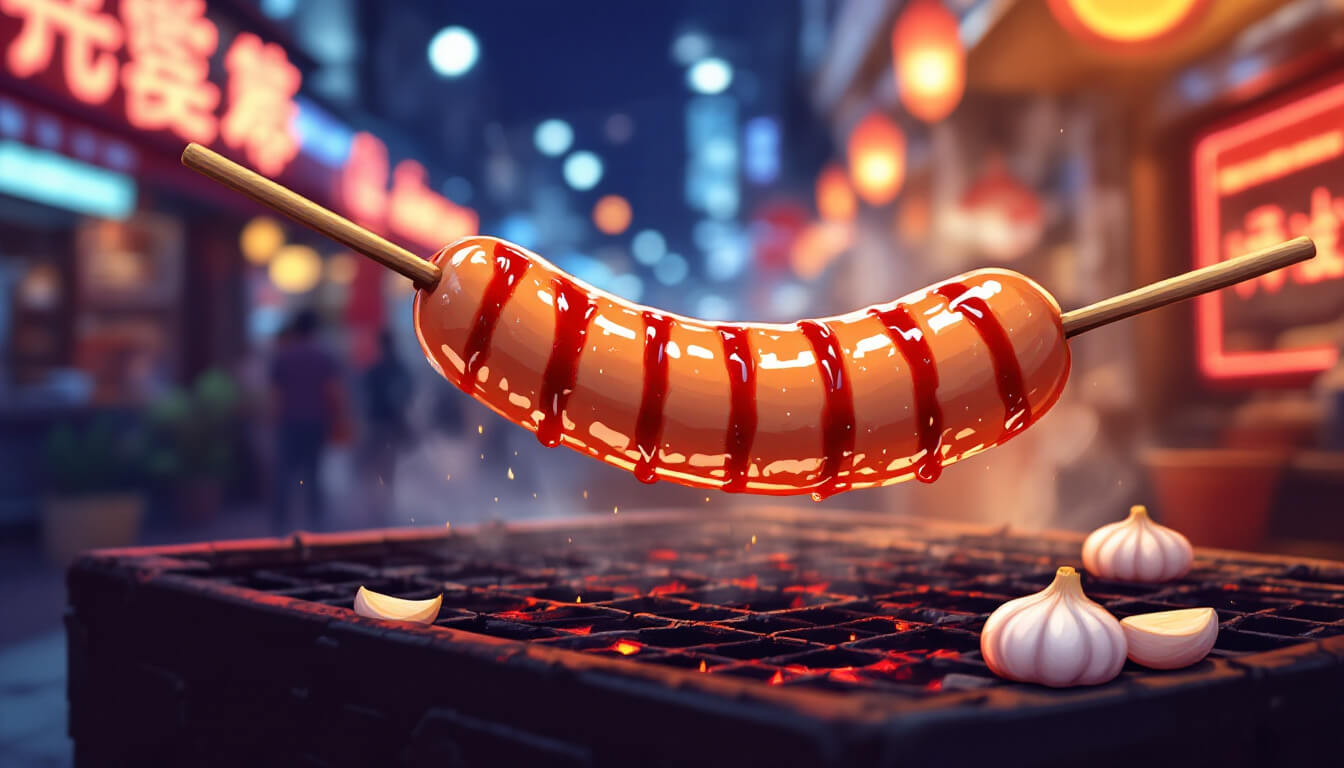
- Hong Hua Sausage (紅花香腸): Grilled Taiwanese pork sausage. Eat it with a raw garlic clove the way locals do.
- Hot-and-sour green papaya (酸辣青木瓜絲): A crunchy, sharp side that cuts through all the fried food.
- Jinri Sushi (今日壽司): Taipei’s tourism office describes it as a sushi shop handed down through three generations.
- Stone-baked corn (芝麻園石頭悶烤玉米) 和 aiyu and grass jelly desserts (愛玉之夢遊仙草) 結束。.
How to eat your way through it
Plan on about NT$300 to NT$600 a person if you want to graze through five or six things. Share everything. Portions are made for walking and eating, and sharing lets you try twice as much. Start savory near the Tonghua Street junction, work toward the stir-fry and lu wei stalls, and finish with Yu Pin Yuan. For more on how night-market eating works in general, see our 台灣夜市指南.
The Michelin Question: Which Linjiang Night Market Stalls Are Still Listed in 2026?

Almost every English article about Linjiang calls it “the Michelin night market.” Some describe it as the night market with the most Bib Gourmand stalls in Taipei. That was true a few years ago. It isn’t now.
What the stalls used to have
The Michelin Guide Taipei launched in 2018, and its Bib Gourmand list (Michelin’s award for good food at a fair price) soon included street food. Four Linjiang stalls received the Bib in earlier editions: Yu Pin Yuan, Liang Chi Lu Wei, Lo Chi Hsiao Chao 和 Tien Hsiang Stinky Tofu.
What the 2026 list says
The 2026 Michelin Guide Taiwan Bib Gourmand list came out in July 2026. It has 146 entries across seven cities, and 37 of them are in Taipei. None of the 37 Taipei entries is a Linjiang stall. We checked the full Taipei list stall by stall. Yu Pin Yuan, Liang Chi, Lo Chi and Tien Hsiang are all missing. Independent trackers say the same about recent editions.
So the honest label is “former Bib Gourmand.” You’ll still see the Michelin Bib logo on stall banners and in older blog posts. A Bib from a past year doesn’t come off the sign. The food didn’t get worse when the listing changed, though. Yu Pin Yuan’s tangyuan are as good as ever, and the queues prove it. Just know what the sticker means. For the stalls that do hold a 2026 listing elsewhere in Taiwan, see our Taiwan Michelin Guide 2026 roundup.
Why does this matter? Plenty of travel itineraries are built around “Michelin stalls,” and some visitors cross the city for them. Linjiang is still worth the trip. Go for the food and the neighborhood feel, not for a current Michelin badge.

Wear Your Night Market Order
Our Taiwanese Street Food Guide tee is a vintage-poster menu of the snacks you’ll find on Linjiang Street. It’s a good conversation starter when you’re back home and craving gua bao.
When to Go to Linjiang Night Market: Hours, Crowds, Cash and Rain

營業時間
Taipei’s Market Administration Office lists the official hours as 6:00 PM to midnight, with no regular closing day. That’s the zone’s official schedule, though, and each stall keeps its own hours. Some open earlier, some stay past midnight, and some popular items sell out well before closing. Several stalls take their own day off, and Tuesday comes up most often in recent reports for Yu Pin Yuan. If one stall is the reason you’re going, check its latest posts or Google Maps listing on the day.
Best time to arrive
- 6:30 to 7:30 PM: the sweet spot. Stalls are set up and queues are manageable.
- 8:00 to 9:30 PM: busiest, especially Friday and Saturday, when office workers and families arrive together.
- After 10:00 PM: quieter, but your must-eat stall may already be sold out.
Weeknights are noticeably calmer than weekends. Because the market serves the neighborhood, it stays busy on ordinary weekdays too, but you won’t get Shilin-style crowds.
Cash and payment
Bring cash, especially NT$100 bills and coins. A few stalls accept mobile payment, but most transactions are still cash, and smaller vendors may not be able to break a NT$1,000 note early in the evening. There are convenience stores around the edges of the market if you need an ATM.
Rainy nights
Linjiang is an open street market, not a covered hall. In light rain the stall awnings help and the crowds thin out, which can actually make it a nicer visit. In heavy rain or a typhoon warning, many stalls simply won’t open. Carry a compact umbrella and wear shoes you don’t mind getting wet. The street is narrow, and umbrellas fill it fast.
Linjiang vs Shilin, Raohe and Ningxia: Which Night Market Is for You?
Taipei has dozens of night markets, and travelers usually have time for two or three. Here’s where Linjiang fits:
- Choose Linjiang if you’re already in Xinyi, you want a local, after-work feel, and you’d rather eat well than shop. It’s compact, easy to walk end to end, and pairs naturally with Taipei 101.
- Choose Shilin if you want the biggest market, with games, shopping and a huge range of food. It’s also the most touristy and the most crowded.
- Choose Raohe if you want a single long, lively street with a temple at one end. Taipei’s tourism office calls Raohe and Linjiang the two most popular night markets in the East District.
- Choose Ningxia if you’re staying near Taipei Main Station or Dadaocheng and want a short, food-only strip.
For rankings, MRT exits and stall counts across all of them, see our best night markets in Taipei guide. If you want sit-down restaurants in the same districts, our Taipei restaurants district playbook picks up where the night markets leave off.
Linjiang Night Market FAQs
Is Linjiang Night Market the same as Tonghua Night Market?
Yes. The official name is Linjiang Street Tourist Night Market (臨江街觀光夜市), and most locals call it Tonghua Night Market (通化夜市) after the cross street. Both street names come from towns in China’s former Andong Province.
What are the opening hours?
Officially 6:00 PM to midnight with no regular closing day, according to Taipei’s Market Administration Office. Individual stalls set their own hours and rest days.
Does Linjiang Night Market still have Michelin Bib Gourmand stalls?
Not on the current list. Four stalls (Yu Pin Yuan, Liang Chi Lu Wei, Lo Chi Hsiao Chao and Tien Hsiang Stinky Tofu) held the Bib Gourmand in earlier editions. None of them is among the 37 Taipei entries on the 2026 Bib Gourmand list.
How far is it from Taipei 101?
About 20 to 25 minutes on foot, or one MRT stop: ride the red line from Taipei 101/World Trade Center to Xinyi Anhe, then walk about ten minutes.
Is it good for vegetarians?
There are good options, including corn, desserts, fruit and some vegetarian snack stalls. Many soups use meat stock, though, so always ask. Our 台灣素食指南 explains how to read 素 signs and what to ask.
我應該在那裡待多久?
Around one to two hours is enough to eat your way from one end to the other without rushing.
Final Thoughts: The Night Market Where Taipei Eats Dinner
Linjiang Night Market won’t be the biggest or flashiest night market on your trip. It may well be the one that feels most like everyday Taipei. It’s a market that grew out of a planned site and a wave of displaced vendors, sits on streets named after towns in Northeast China, and still sells vegetables at breakfast and stinky tofu at dinner. The Michelin badges on the banners belong to past years, and the queues for hot tangyuan on ice are still there.
Go after Taipei 101, arrive by seven, bring cash and an appetite, and finish with dessert. And when someone asks where you ate, say “Tonghua.” It’ll sound like you live there.

每週一張來自台灣的明信片
Night market finds, food stories and the history hiding in Taiwan’s street names, straight to your inbox. No spam, unsubscribe anytime.
免費領取台灣貼紙!
留下您的郵箱,我們將向您發送限量版台灣貼紙——以及搶先了解最新商品發售信息和感受海島風情的機會。.
絕不發送垃圾郵件。隨時可以取消訂閱。.