The Ultimate Taiwan Map Guide: Every Region, City & Hidden Gem Worth Exploring
When you look at a Taiwan map for the first time, it’s easy to underestimate what you’re seeing. A sweet-potato-shaped island roughly the size of Maryland, tucked between the Philippine Sea and the Taiwan Strait. But zoom in, and this compact landmass reveals one of the most geographically diverse and culturally rich places on Earth — 268 mountain peaks over 3,000 meters, subtropical forests, volcanic hot springs, and more night markets per square kilometer than almost anywhere else in the world.
This isn’t your average geography lesson. This Taiwan map guide takes you region by region through the island’s most iconic cities, hidden gems, signature dishes, and cultural treasures — the kind of insider knowledge that turns a casual viewer into a genuine Taiwan enthusiast. Whether you’re planning your first trip, reliving memories of a place you fell in love with, or simply satisfying your curiosity about this fascinating island, consider this your ultimate cultural roadmap.
Taiwan at a Glance — Shape, Size, and Why It Packs So Much Into One Island
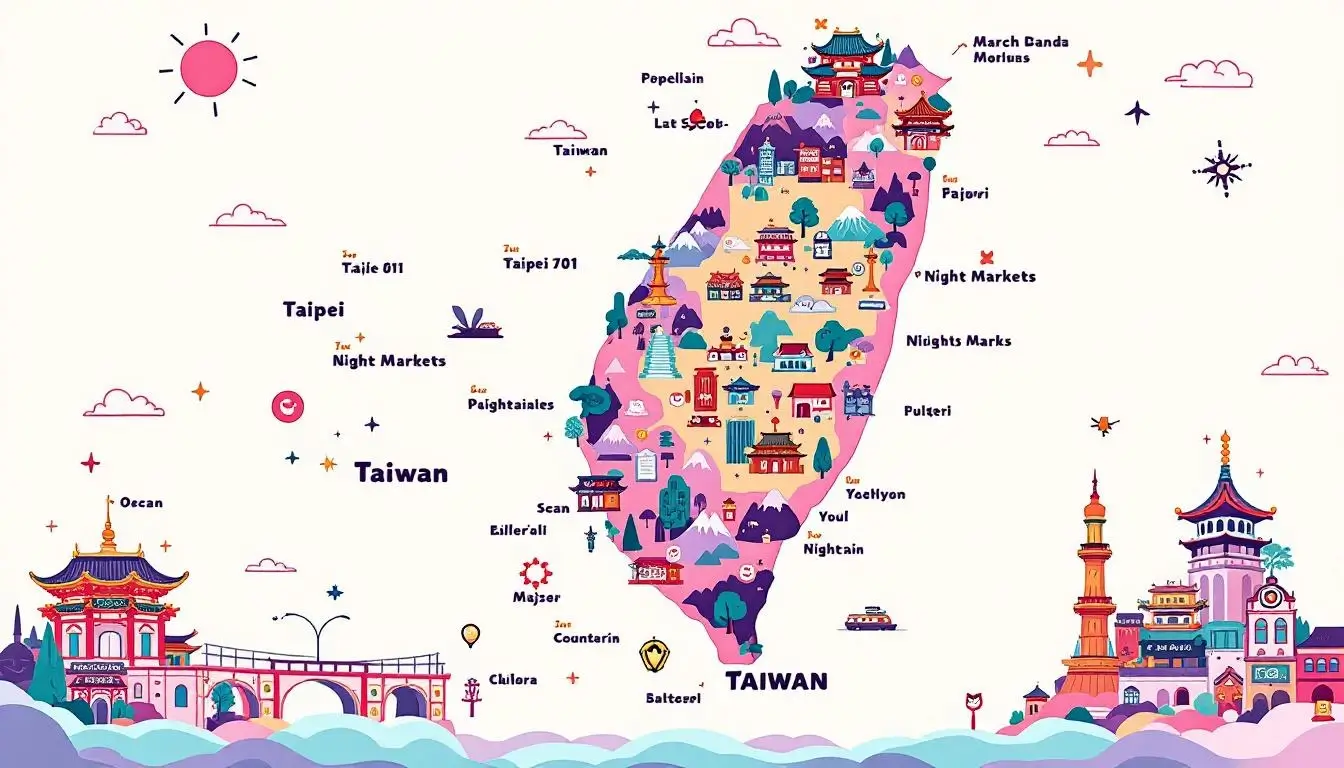
Taiwan sits at the junction of the Eurasian and Philippine Sea tectonic plates, which explains why an island just 394 kilometers long and 144 kilometers wide contains some of the most dramatic topography in Asia. The Central Mountain Range runs like a spine down the island’s eastern half, with Jade Mountain (Yushan) peaking at 3,952 meters — taller than Mount Fuji.
On any detailed Taiwan map, you’ll notice the population clusters heavily along the western plain, where flat, fertile land has supported agriculture and urban development for centuries. The eastern coast, by contrast, is wild and sparsely populated, carved by gorges and framed by cliffs that drop straight into the Pacific Ocean.
The island is divided into six special municipalities, three provincial cities, and thirteen counties. But locals tend to think in broader regional terms: the bustling north, the cultural heartland of the center, the food-obsessed south, the rugged east, and the dreamy offshore islands. Each region has its own personality, dialect influences, and culinary identity.
What makes Taiwan extraordinary isn’t just its geography — it’s the density of experiences packed into such a small space. You can ride the high-speed rail from a world-class metropolis to a rural tea village in under an hour. You can surf in the morning and soak in a mountain hot spring by evening. Few places on Earth offer this kind of variety in such a compact package.
Northern Taiwan — Taipei, New Taipei, and the Urban Heart of the Island
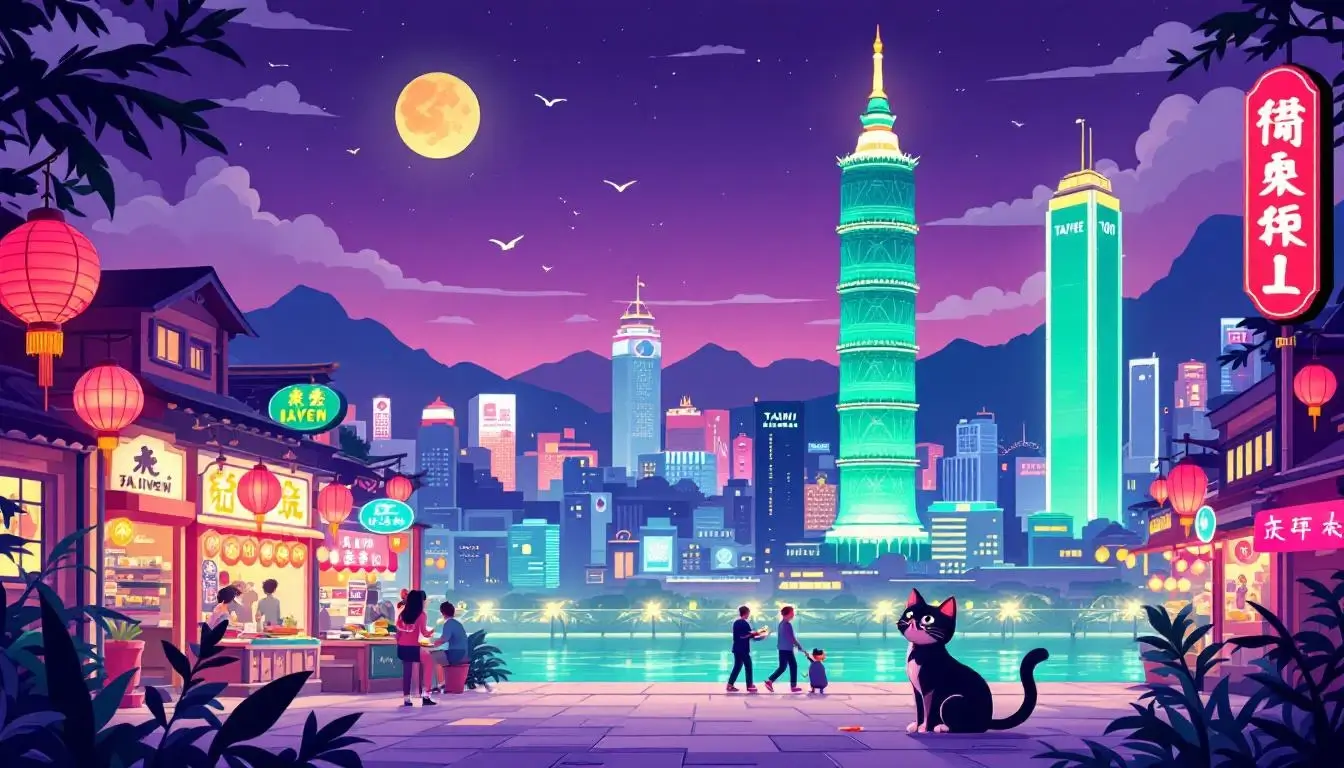
Northern Taiwan is where most visitors get their first taste of the island, and what a taste it is. Taipei, the capital and cultural center, is a city that seamlessly blends ancient temples with futuristic skyscrapers, traditional market stalls with Michelin-starred restaurants.
On a Taiwan map, Taipei sits in a basin surrounded by mountains — Yangmingshan National Park to the north offers volcanic landscapes, steaming fumaroles, and cherry blossom trails just 30 minutes from downtown. The city’s MRT system is legendary for its cleanliness and efficiency, making it one of the easiest capitals in Asia to navigate.
Must-See Spots in Northern Taiwan
- Taipei 101 — Once the world’s tallest building, this iconic skyscraper remains the city’s most recognizable landmark. The observation deck offers panoramic views of the entire basin.
- Jiufen — A hillside mining town turned tourist gem, famous for its red lantern-lit alleyways, taro balls, and views that inspired the look of Miyazaki’s Spirited Away.
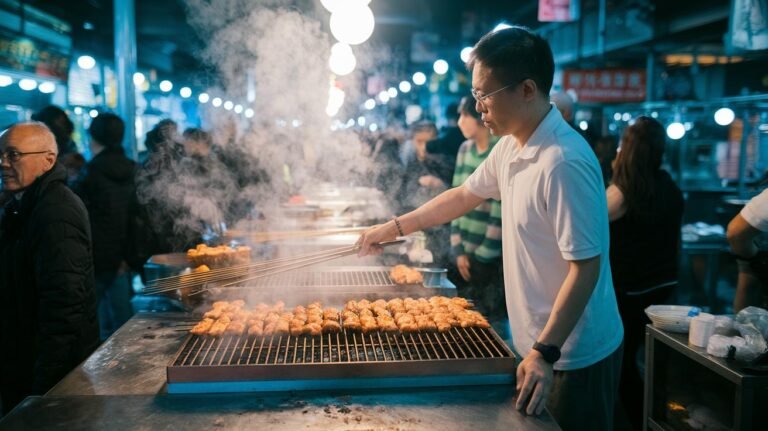
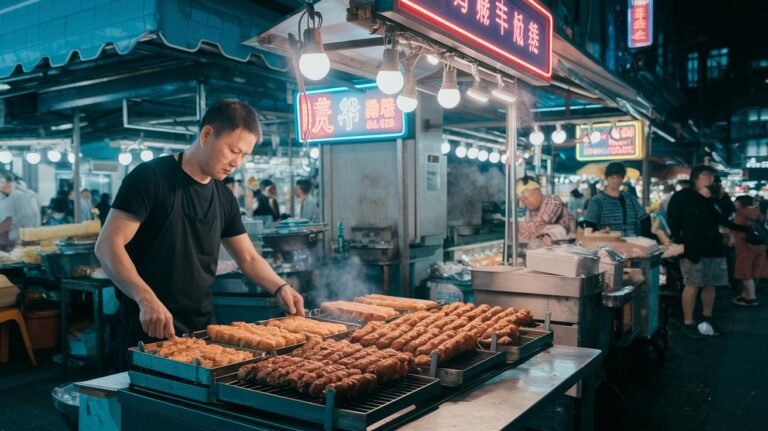
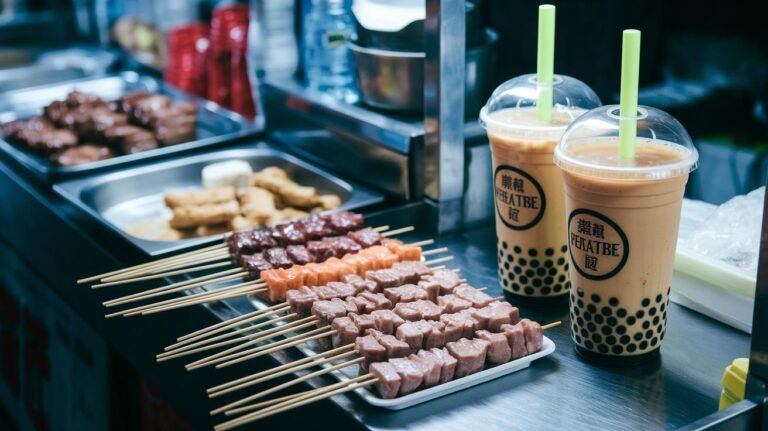
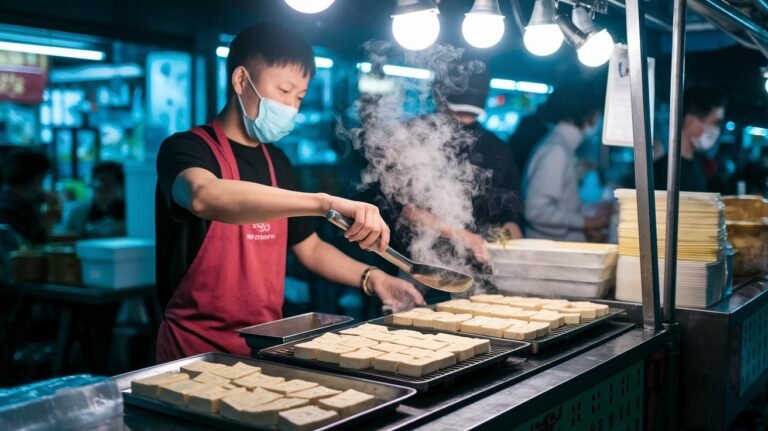
- Shilin Night Market — The granddaddy of Taiwan’s night markets. Over 500 stalls serving everything from iconic Taipei night market foods like stinky tofu and pepper buns to oyster omelets and bubble tea.
- Beitou Hot Springs — Natural thermal valley with public and private baths, plus the stunning Beitou Library — one of Asia’s most beautiful green buildings.
- Yehliu Geopark — Surreal rock formations sculpted by wind and sea erosion, including the famous Queen’s Head rock.
New Taipei City wraps around the capital like a belt, encompassing everything from dense urban districts to misty mountain trails. The Pingxi Sky Lantern Festival, where thousands of glowing lanterns float into the night sky, takes place here each year during the Lantern Festival.
If you’re exploring the diverse languages of Taiwan, you’ll notice that Taipei is the most linguistically cosmopolitan city on the island — Mandarin dominates, but you’ll hear Taiwanese Hokkien in the older neighborhoods, Hakka in certain districts, and English in the international quarters.
Central Taiwan — Taichung, Sun Moon Lake, and Tea Country
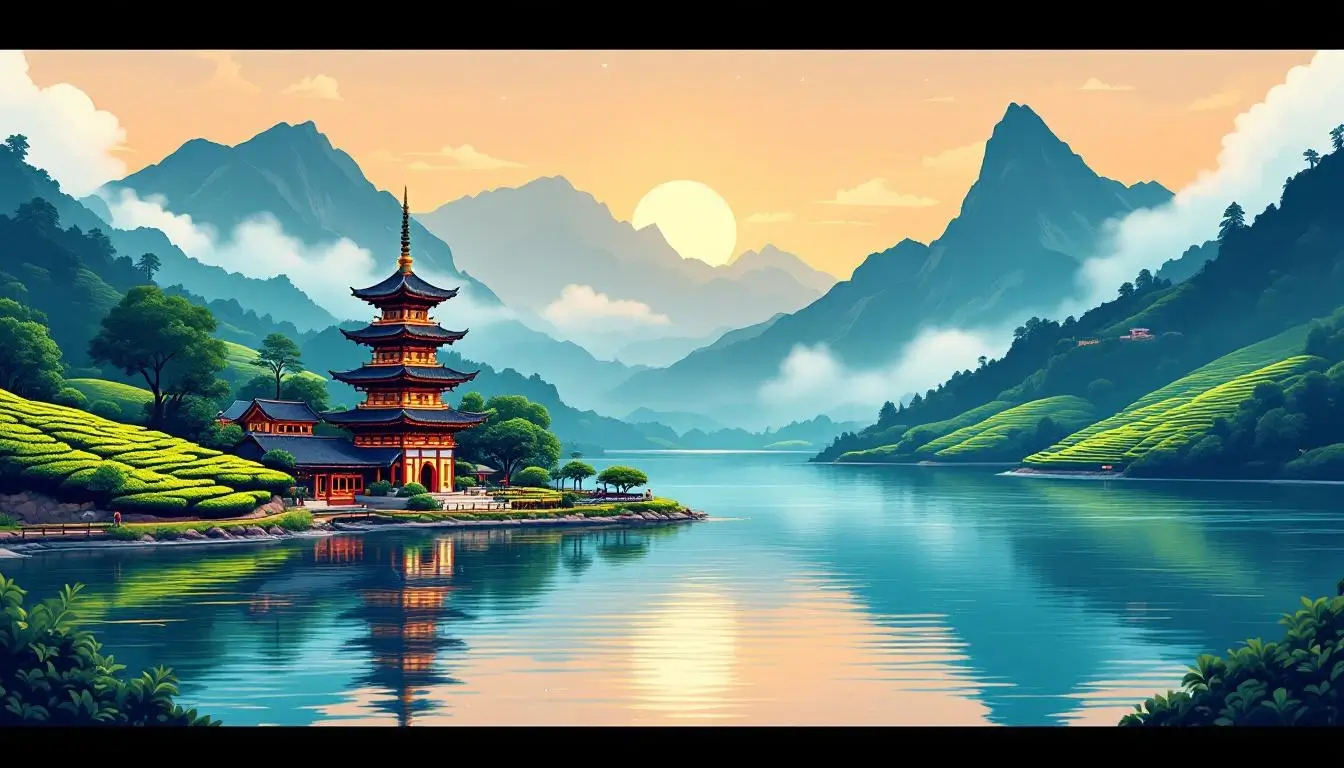
Central Taiwan is the island’s cultural heartland — where ancient traditions, artisan craftsmanship, and some of the world’s finest teas converge in a landscape of rolling hills and misty mountains. This is where many Taiwanese say the island’s true character lives.
Taichung is Taiwan’s third-largest city and its creative capital. The Rainbow Village — a former military dependents’ village saved from demolition by one man’s colorful paintings — has become one of the most Instagrammed spots in Taiwan. The National Taichung Theater, designed by Pritzker Prize winner Toyo Ito, is an architectural masterpiece that looks like it was carved from a single piece of flowing stone.
Highlights of Central Taiwan
- Sun Moon Lake — Taiwan’s largest natural lake, sacred to the Thao indigenous people. Cycling the 30-kilometer lakeside path is regularly rated among the best cycling routes in the world.
- Alishan (Ali Mountain) — Famous for its ancient cypress forests, sea of clouds, and legendary sunrise. The narrow-gauge forest railway built during the Japanese colonial era still operates, climbing from tropical lowlands to alpine forest.
- Lukang — One of Taiwan’s oldest port towns, Lukang preserves traditional temples, artisan workshops, and narrow lanes that haven’t changed much in 200 years. This is where you’ll find master woodcarvers, lantern makers, and incense artisans keeping centuries-old crafts alive.
- Nantou tea country — The high-altitude oolong teas from this region — especially Dong Ding and Alishan high mountain tea — are considered among the finest in the world.
Bubble tea was actually invented in Taichung in the 1980s. The original Chun Shui Tang teahouse still operates, and yes, you can still order the original recipe that launched a global phenomenon.
Southern Taiwan — Tainan, Kaohsiung, and the Food Capital of the Island
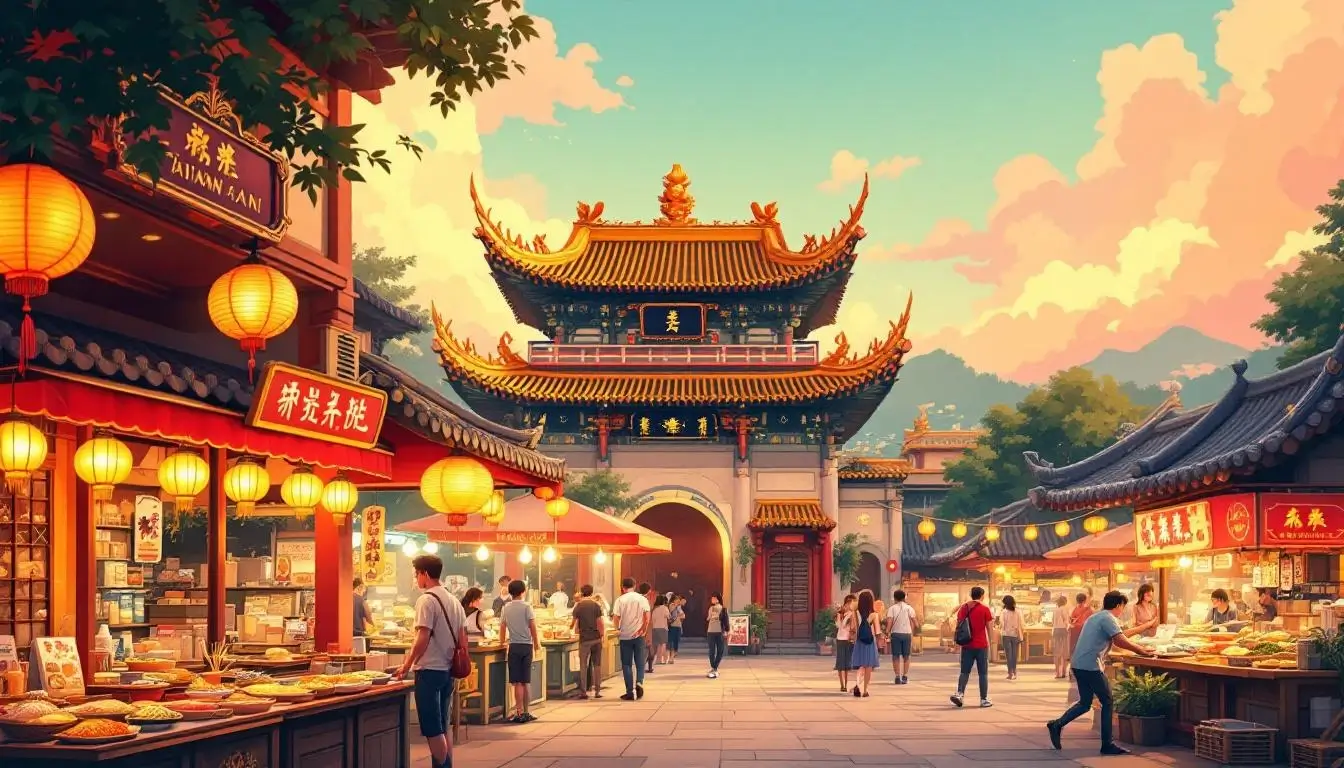
If you want to understand the soul of Taiwan, head south. Tainan — the island’s oldest city and former capital — is where Taiwanese identity runs deepest. It’s a city that wears its 400 years of history proudly, from Dutch colonial fortifications to Japanese-era shophouses to temples so old they predate the city’s modern street grid.
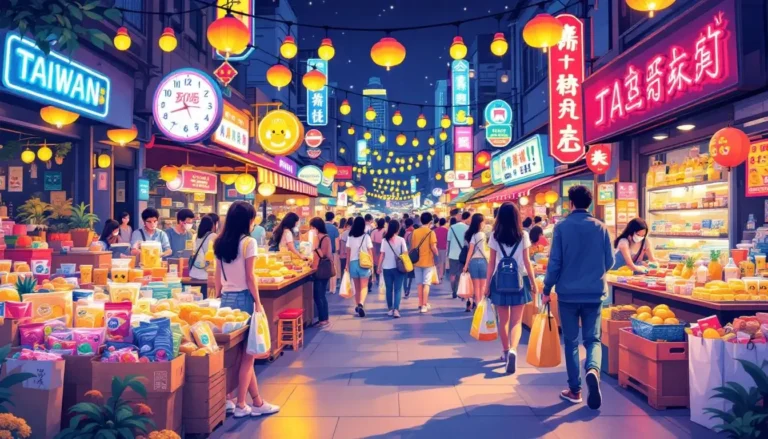
But let’s be honest: most people come to Tainan for the food. This is the undisputed food capital of Taiwan, where even the simplest bowl of danzai noodles or a plate of milkfish congee carries generations of culinary tradition. Taiwan’s night market culture reaches its pinnacle here — the Flower Night Market alone stretches for nearly a kilometer.
Southern Taiwan Must-Visits
- Anping Fort (Tainan) — Built by the Dutch East India Company in 1624, this fort is the oldest European-built structure in Taiwan and a tangible reminder of the island’s global trading history.
- Kaohsiung — Taiwan’s second-largest city and biggest port. The transformation of the Pier-2 Art District from abandoned warehouses to a vibrant creative hub symbolizes the city’s reinvention.
- Fo Guang Shan — The largest Buddhist monastery in Taiwan, home to the 36-meter Big Buddha statue and the stunning Buddha Memorial Center. It’s as much a cultural experience as a spiritual one.
- Kenting National Park — Taiwan’s southernmost tip, where tropical beaches, coral reefs, and lush forests create a vacation paradise that feels worlds away from the cities up north.
Kaohsiung’s Love River has been revitalized from an industrial waterway into a romantic promenade with river cruises, waterfront cafés, and neon-lit bridges. The Dome of Light inside Formosa Boulevard MRT station — the world’s largest single work of glass art — is reason enough to visit.
If you’re a food lover planning your southern Taiwan itinerary, don’t miss our guide to Taipei’s best restaurants for comparison — the friendly north-south food rivalry is one of Taiwan’s great cultural debates.
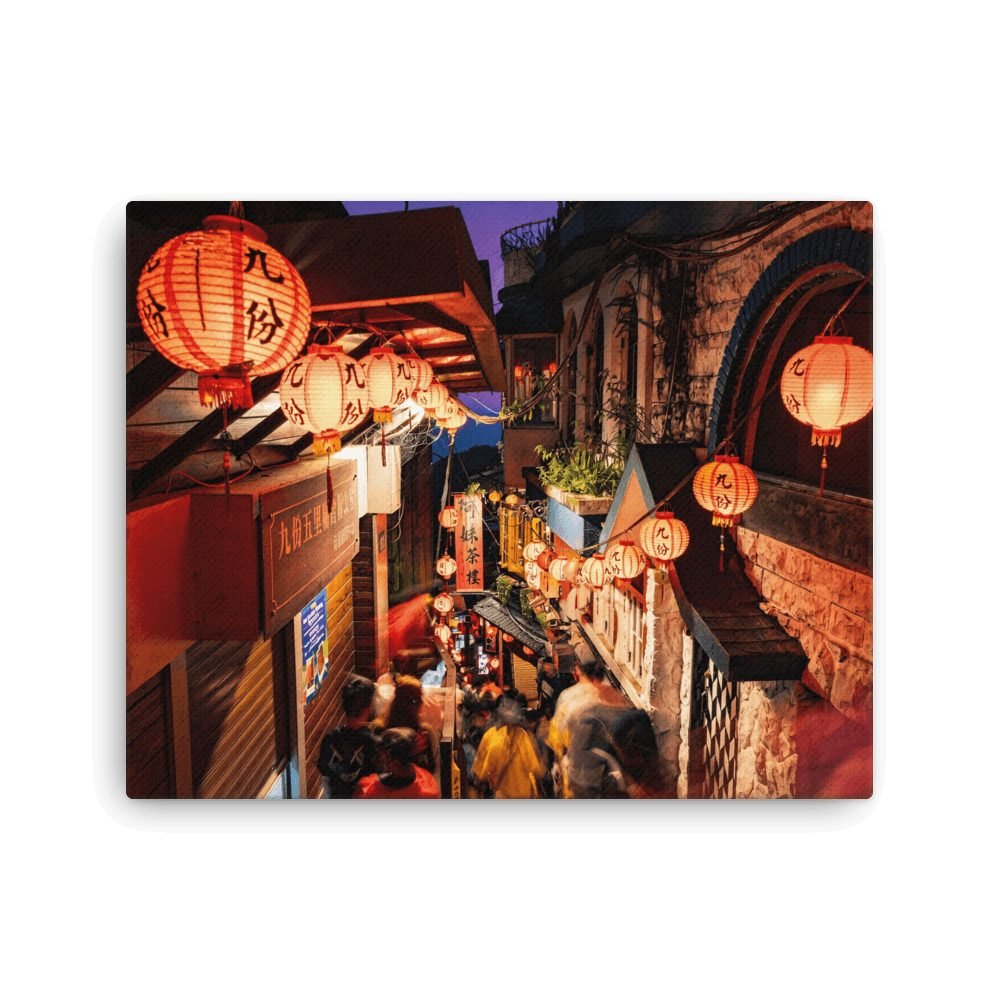
Bring Jiufen’s Magic Home
Love those iconic red lantern-lit streets? Our Jiu-fen Night Market canvas captures the atmospheric magic of Taiwan’s most photogenic old street — perfect for any wall that needs a little Taiwanese soul.
Eastern Taiwan — Hualien, Taroko Gorge, and the Wild Coast
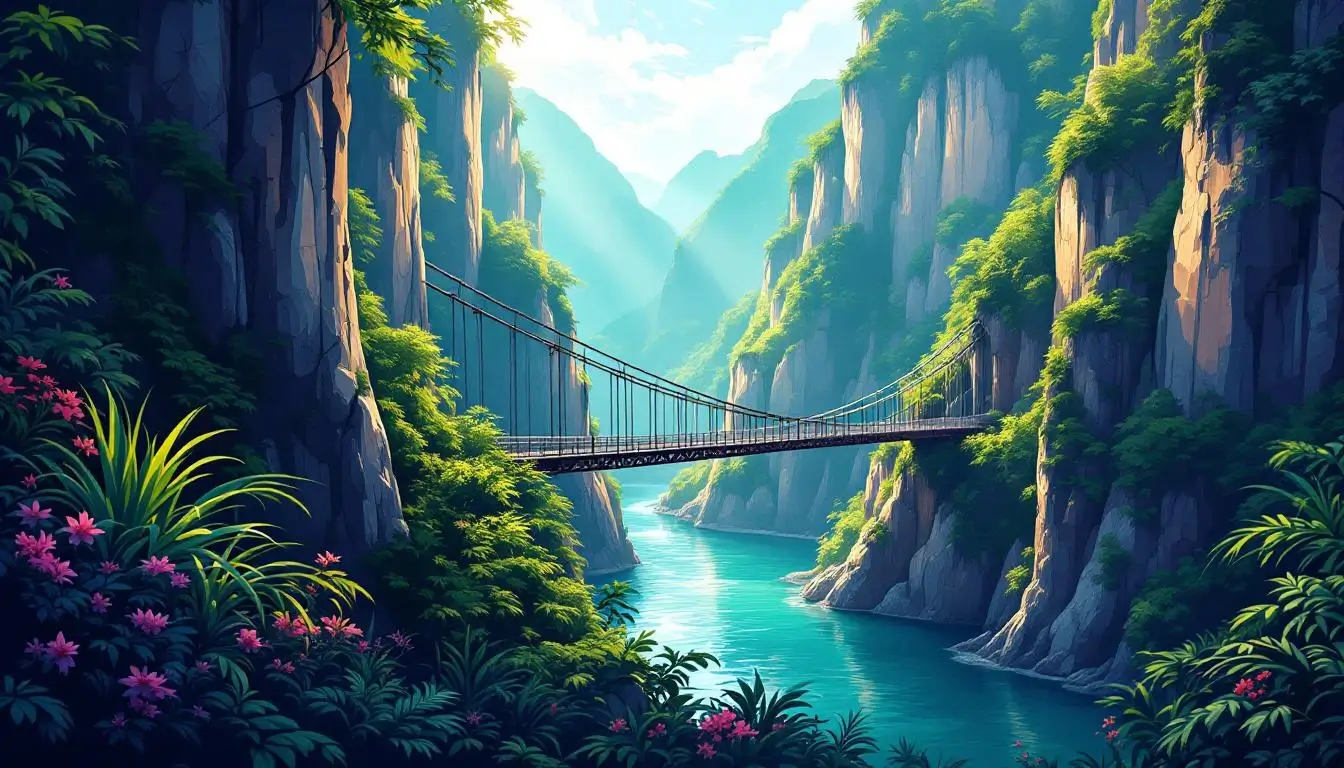
Look at the eastern edge of any Taiwan map and you’ll notice something striking: almost no cities. The eastern coast is Taiwan at its most raw and untamed — towering marble cliffs, thundering waterfalls, indigenous villages that predate Chinese settlement by thousands of years, and some of the most dramatic coastal scenery in the Pacific.
Taroko Gorge is the crown jewel. Carved over millions of years by the Liwu River through solid marble, this 19-kilometer gorge is one of the natural wonders of Asia. The Swallow Grotto trail clings to the cliff face hundreds of meters above the river, offering views that genuinely take your breath away.
Eastern Taiwan Highlights
- Hualien — The gateway to Taroko Gorge and a city with a distinctly relaxed vibe. The Dongdamen Night Market here serves some of Taiwan’s best indigenous cuisine — bamboo rice, wild boar sausage, and mochi pounded fresh before your eyes.
- Taitung — Hot air balloon festival capital and home to some of the island’s most beautiful rice paddies. The Brown Boulevard, lined with towering trees, is one of the most photographed roads in Taiwan.
- Qingshui Cliffs — Sheer 800-meter cliffs dropping into the turquoise Pacific. Best viewed from the Suhua Highway, one of the most spectacular (and hair-raising) coastal roads in the world.
- East Rift Valley — A wide, fertile valley between two mountain ranges, famous for organic farming, hot springs, and the Amis indigenous harvest festival each summer.
Eastern Taiwan is also where you’ll encounter the greatest concentration of Taiwan’s indigenous peoples — 16 officially recognized tribes with distinct languages, traditions, and art forms. The Amis, Truku, and Bunun peoples have called this coast home for over 6,000 years.
Speaking of celebrating Taiwan’s unique cultural heritage — our Taipei Cityscape Sunrise Jigsaw Puzzle captures that golden-hour magic of the island’s skyline. It’s a great way to keep Taiwan close, even when you’re thousands of miles from the island.
Offshore Islands — Penghu, Green Island, Kinmen, and More
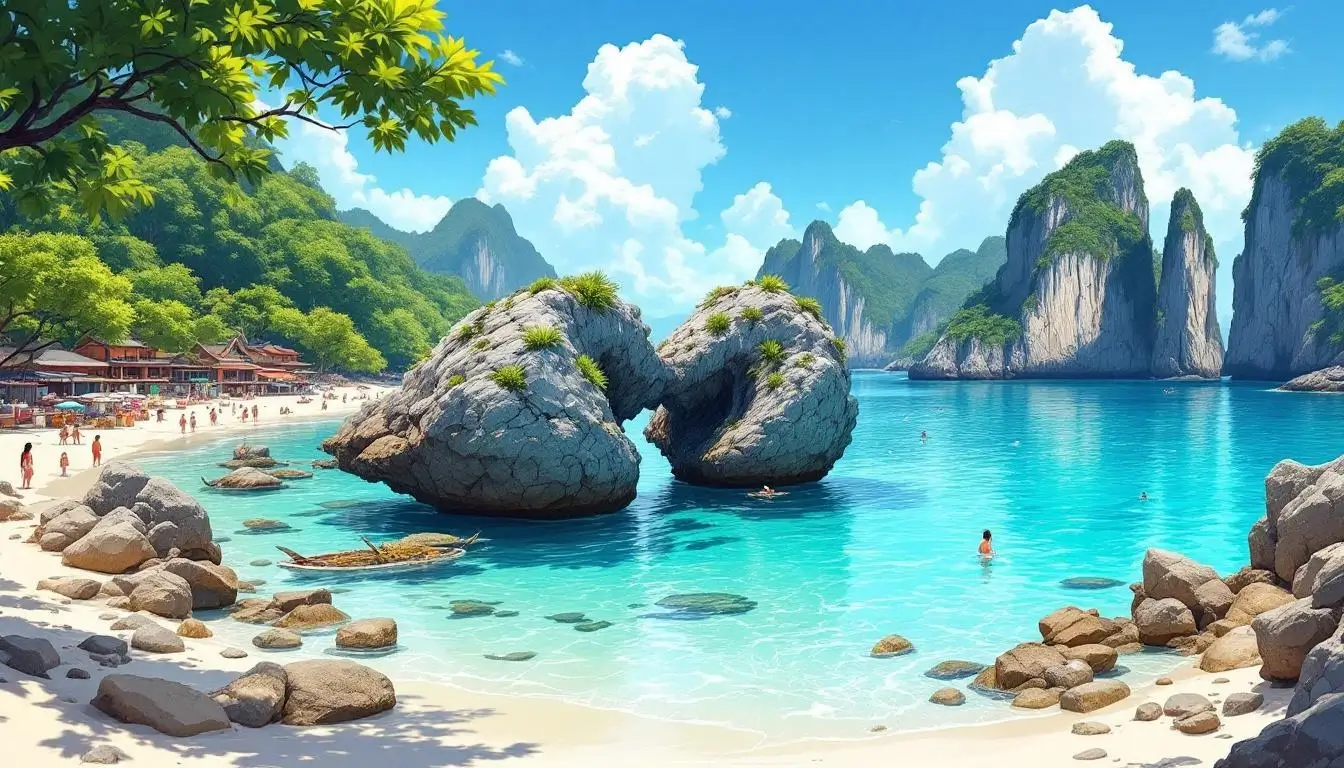
The Taiwan map doesn’t stop at the main island’s coastline. Scattered across the surrounding waters are dozens of islands, each with a personality entirely its own. These offshore gems offer some of Taiwan’s most unique cultural experiences and untouched natural beauty.
The Big Three Offshore Destinations
Penghu (Pescadores) — An archipelago of 90 islands in the Taiwan Strait, Penghu is Taiwan’s summer paradise. Crystal-clear waters, basalt column formations, ancient coral-stone villages, and the Penghu Fireworks Festival make this the premier beach destination. The Twin Hearts Stone Weir — a centuries-old fish trap shaped like two hearts — is one of Taiwan’s most romantic landmarks.
Green Island (Ludao) — A volcanic island off Taitung’s coast famous for saltwater hot springs (one of only three in the world), world-class snorkeling and diving, and a surprisingly dark history as a political prison during the White Terror era. Today it’s a diver’s paradise with pristine coral reefs.
Kinmen (Quemoy) — Just 2 kilometers off the Chinese coast, Kinmen’s history is intense — this is where Cold War artillery battles played out between Taiwan and China. Today, the former military tunnels, traditional Fujian-style architecture, and legendary kaoliang sorghum liquor make it one of Taiwan’s most fascinating cultural destinations.
Other Islands Worth Noting
- Orchid Island (Lanyu) — Home to the Tao (Yami) people, famous for their hand-carved wooden canoes and the annual flying fish festival.
- Matsu Islands — Remote islands near mainland China with Fujian-style stone villages and the surreal Blue Tears bioluminescence phenomenon that lights up the ocean at night.
- Little Liuqiu — A coral island off Kaohsiung where sea turtles outnumber tourists and the snorkeling is world-class.
Getting Around Taiwan — HSR, MRT, Trains, and the Best Routes on the Taiwan Map
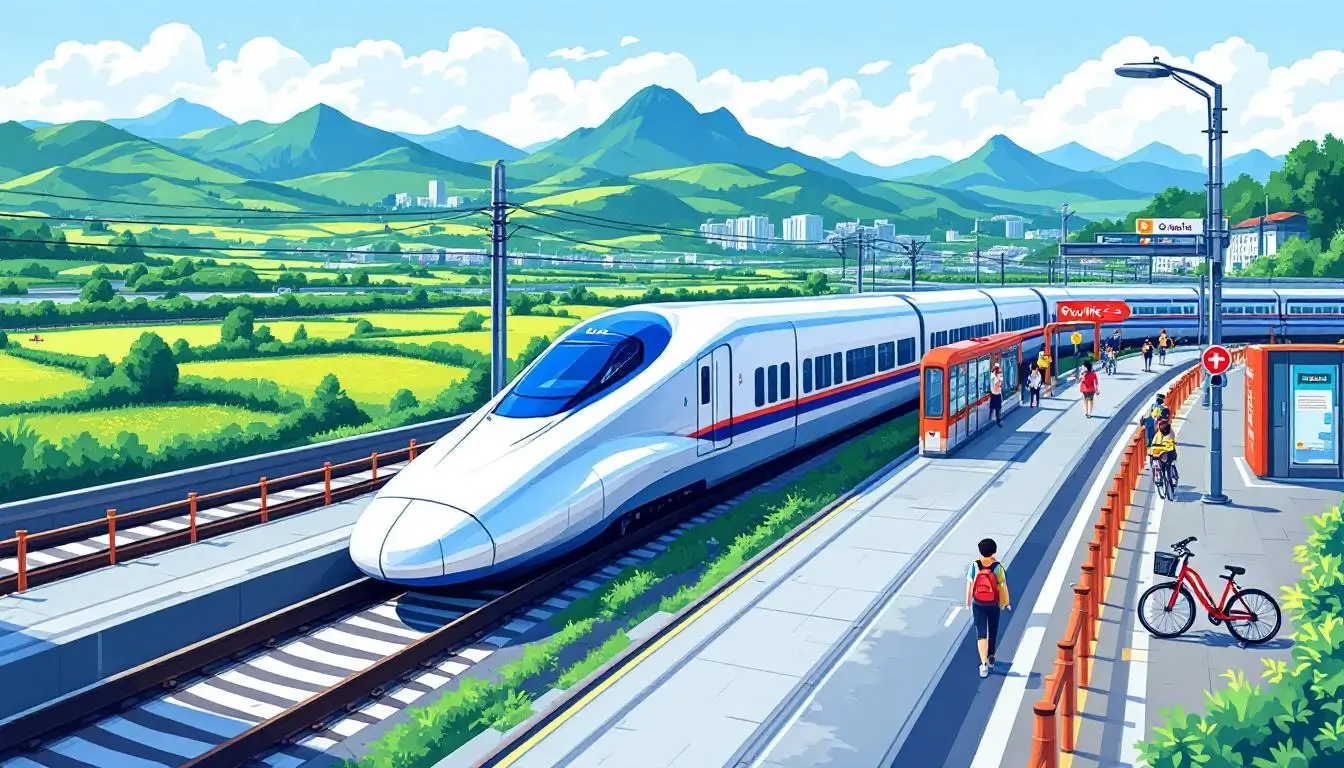
One of the best things about planning your journey on a Taiwan map is realizing how connected everything is. Taiwan’s transportation infrastructure punches way above its weight for an island this size.
High-Speed Rail (HSR)
The Taiwan High Speed Rail runs along the western corridor from Taipei to Zuoying (Kaohsiung) in just 90 minutes, with stops in Banqiao, Taoyuan, Hsinchu, Miaoli, Taichung, Changhua, Yunlin, Chiayi, and Tainan. It’s fast, clean, punctual, and surprisingly affordable — especially with the Tourist Pass that offers unlimited rides for a set number of days.
Taiwan Railways (TRA)
The older conventional rail network circles the entire island, including the stunning eastern coast route that the HSR doesn’t cover. The Hualien to Taitung stretch is one of the most scenic train rides in Asia, weaving between mountains and ocean.
Taipei MRT
The Taipei Metro system is a masterpiece of urban transit — clean stations, trains every 2-5 minutes during rush hour, and signage in English, Mandarin, Taiwanese, and Hakka. The EasyCard (like an Oyster card or Suica) works on all public transit islandwide.
Best Route Planning Tips
- Classic 7-day loop: Taipei → HSR to Taichung → Sun Moon Lake → HSR to Tainan → Kaohsiung → TRA to Hualien → Taroko → TRA back to Taipei
- Rent a scooter: Outside the major cities, scooter rental is the local way to explore. Winding coastal roads, mountain passes, and tea country are infinitely more fun on two wheels.
- Domestic flights: Mandarin Airlines and UNI Air connect Taipei to Penghu, Green Island, Kinmen, and Matsu in under an hour.
- YouBike: Taiwan’s public bike-sharing system covers most urban areas. It’s cheap, convenient, and integrates with your EasyCard.
For anyone looking to bring a piece of the island home, check out our collection of Taiwan graphic tees — they’re the kind of wearable souvenirs that start conversations about this incredible place.
Frequently Asked Questions About the Taiwan Map
Where is Taiwan on the world map?
Taiwan is located in East Asia, between the East China Sea to the north and the South China Sea to the south. It sits approximately 180 kilometers off the southeastern coast of mainland China, with Japan’s Ryukyu Islands to the northeast and the Philippines to the south. On a world map, you’ll find it roughly at 23.5°N latitude — right on the Tropic of Cancer.
How big is Taiwan compared to other countries?
Taiwan covers approximately 36,193 square kilometers — roughly the size of the Netherlands, slightly smaller than Switzerland, and about the same as the U.S. state of Maryland. Despite its compact size, Taiwan has a population of about 23.5 million people, making it one of the most densely populated countries in the world.
What are Taiwan’s main regions?
Taiwan is generally divided into five regions: Northern Taiwan (Taipei, New Taipei, Keelung, Taoyuan), Central Taiwan (Taichung, Nantou, Changhua, Yunlin), Southern Taiwan (Tainan, Kaohsiung, Chiayi, Pingtung), Eastern Taiwan (Hualien, Taitung), and the Offshore Islands (Penghu, Kinmen, Matsu, Green Island, Orchid Island).
Is Taiwan safe for travelers?
Taiwan is consistently ranked as one of the safest countries in Asia for travelers. Violent crime is extremely rare, public spaces are well-maintained, and locals are famously welcoming to visitors. The biggest risks are typhoons during summer months (June-October) and minor earthquake activity.
What languages are spoken in Taiwan?
Mandarin Chinese is the official language, but Taiwanese Hokkien (Taiyu) is widely spoken, especially in southern Taiwan. Hakka is spoken by about 15% of the population, and Taiwan’s indigenous peoples speak their own Austronesian languages. English proficiency is growing, particularly in Taipei and among younger generations.
Final Thoughts — Your Taiwan Map Is Just the Beginning
A map of Taiwan tells you the shapes and distances, but it can’t capture the steam rising from a bowl of beef noodle soup at 2 AM, the sound of temple drums during a Mazu pilgrimage, or the electric energy of a night market at full swing. Taiwan is a place that rewards curiosity — every region has its own character, its own flavors, and its own stories waiting to be discovered.
Whether you’re tracing your finger across a Taiwan map dreaming of your first trip, or you’ve been dozens of times and keep finding new reasons to go back, this island has a way of getting under your skin. The mountains, the food, the people, the seamless mix of ancient tradition and cutting-edge modernity — it all adds up to something genuinely special.
Use this guide as your starting point. Pick a region, follow the food, and let Taiwan surprise you. It always does.

Grab a Free Taiwan Sticker!
Drop your email and we’ll send you a limited-edition Taiwan sticker — plus insider access to new merch drops and island vibes.
No spam. Unsubscribe anytime.