Complete Guide to Taiwan’s Best Shopping Malls: Where to Shop Like a Local
Taiwan’s shopping culture is legendary among travelers and locals alike. Whether you’re hunting for the latest fashion, hunting for quirky snacks, or simply soaking in the energy of bustling crowds, a Taiwan mall offers an experience unlike anywhere else in the world. These aren’t just places to buy things—they’re cultural hubs where Taiwanese life unfolds in all its vibrant, modern glory. From towering luxury complexes in Taipei to neighborhood shopping centers in smaller cities, the Taiwan mall scene tells the story of a nation that loves shopping, eating, and community gathering in equal measure.
If you’ve never explored a Taiwan mall, you’re missing out on one of the country’s defining experiences. These spaces are meticulously designed, impeccably clean, and filled with a dizzying array of brands—many exclusive to Taiwan or Asia. The energy is infectious, the food courts are legendary, and the people-watching is second to none. This guide will walk you through the essential malls across Taiwan, what makes each one special, and how to navigate them like a pro.
The Taipei Mall Experience: Where Shopping Meets Spectacle
Taipei is home to some of Asia’s most impressive shopping destinations, and the Taiwan mall landscape here is particularly dense and competitive. The city’s malls aren’t just retail spaces—they’re architectural statements and cultural landmarks. Taipei 101 Shopping Mall, located in the iconic Taipei 101 tower, is perhaps the most famous. Spanning multiple floors with designer boutiques, luxury watches, and high-end restaurants, it represents the pinnacle of upscale shopping in Taiwan. The mall attracts both serious luxury shoppers and casual visitors who come to experience the sheer scale and sophistication of the operation.
But Taipei’s Taiwan mall offerings extend far beyond luxury. Taipei has malls for every budget and preference. Eslite Bookstore, while technically a bookstore, functions as a cultural mall experience—it’s enormous, multi-story, and filled with books, stationery, gifts, and a café culture that makes it a destination unto itself. The bookstore concept reflects something deeply Taiwanese: the idea that shopping spaces should nourish the mind and soul, not just the wallet. Visitors often spend hours browsing, discovering obscure Taiwanese authors, beautiful stationery designs, and quirky gifts that perfectly capture Taiwan’s creative spirit.
The Taipei Neon District malls like Syntrend and The Breeze Center represent a different flavor of the Taiwan mall experience. These are younger, hipper spaces designed to appeal to teenagers and twenty-somethings. They’re packed with Japanese and Korean brands, trendy cafés, and that indefinable energy that makes Taipei feel like one of Asia’s coolest cities. The Breeze Center, in particular, is known for its fashion-forward tenants and Instagram-worthy design. Walking through these malls, you’ll see the same brands you might find in Tokyo or Seoul, but there’s a distinctly Taiwanese twist to how they’re curated and presented.
Taichung and Central Taiwan: The Rising Mall Destinations
While Taipei dominates the Taiwan mall conversation, Taichung has emerged as a serious contender in recent years. Taichung is Taiwan’s third-largest city, and its malls reflect its growing cosmopolitan aspirations. The Miyahara complex is a stunning example—it’s not just a mall but an entertainment and cultural destination. This massive complex includes shopping, dining, a museum, and beautiful architectural spaces that make it worth visiting even if you don’t plan to buy anything. The Miyahara represents a new generation of Taiwan mall design that prioritizes experience and culture alongside commerce.
Taichung’s Golden Mall area is another hub worth exploring. These interconnected shopping centers create a mini-district where you can spend an entire day moving between stores, restaurants, and entertainment venues. The energy here is different from Taipei—less frenetic, more relaxed, but equally vibrant. You’ll find local Taiwanese brands alongside international chains, and the food courts feature regional Taichung specialties that you won’t find in other cities. This regional specificity is a beautiful aspect of Taiwan’s mall culture; each city’s malls reflect local tastes and preferences.
The Fengjia Night Market in Taichung deserves mention as the world’s largest night market, though it’s technically not a Taiwan mall in the traditional sense. However, it embodies the spirit of Taiwanese shopping culture—informal, energetic, democratic. Fengjia proves that not all great shopping experiences in Taiwan happen in climate-controlled, designer-filled complexes. The contrast between Fengjia’s raw energy and Miyahara’s refined sophistication perfectly encapsulates Taiwan’s diverse shopping landscape.
Kaohsiung and Southern Taiwan: Discovering Hidden Shopping Gems
Kaohsiung, Taiwan’s second-largest city, has its own distinctive Taiwan mall culture. The city is undergoing rapid development, and its malls reflect this transformation. Kaohsiung’s malls tend to be slightly less crowded than Taipei’s, which can be refreshing if you prefer a more leisurely shopping experience. The Dream Mall and Formosa Boulevard area shopping complexes are popular with locals and offer a good mix of international brands and local Taiwanese shops.
What makes Kaohsiung’s Taiwan mall scene interesting is how it blends modern retail with the city’s artistic identity. Kaohsiung has positioned itself as Taiwan’s cultural capital, and you can see this reflected in the malls’ design and tenant mix. There’s often more emphasis on local designers, independent shops, and cultural events within the malls. The Kaohsiung Pier-2 Art Center, while not a mall, exists in the same cultural ecosystem and shows how the city thinks about public spaces and commerce.
Southern Taiwan’s smaller cities also have their own Taiwan mall experiences worth exploring. Tainan, Taiwan’s oldest city, has malls that blend historical charm with modern retail. These smaller regional malls often feel more authentic precisely because they’re less polished than Taipei’s mega-malls. You’ll encounter more Taiwanese-only brands, more regional products, and a shopping experience that feels less sanitized and more genuinely reflective of how Taiwanese people actually shop in their daily lives.
The Architecture and Design Philosophy of Taiwan Malls
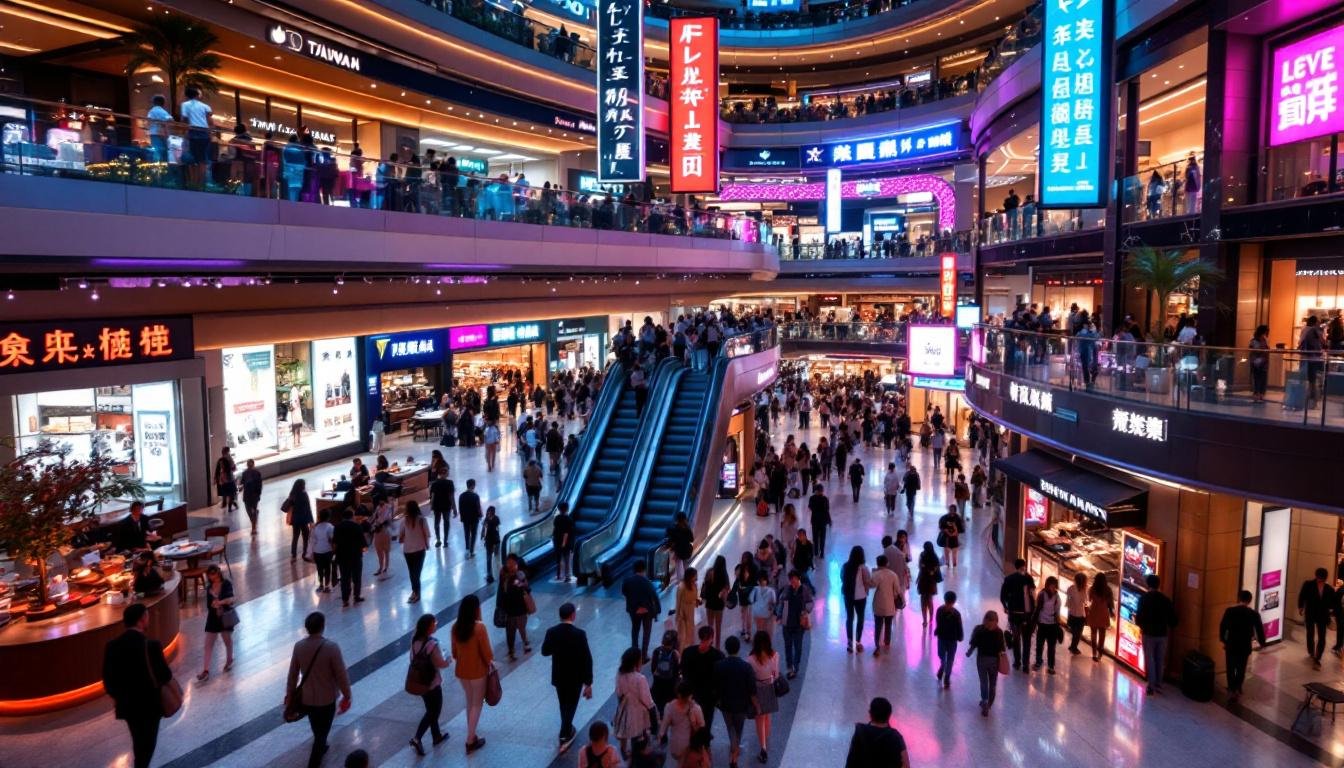
One thing that strikes visitors immediately about a Taiwan mall is the thoughtfulness of its design. Taiwanese architects and designers have elevated mall design to an art form. These aren’t just boxes filled with stores; they’re carefully orchestrated environments where every detail matters. The lighting is carefully calibrated, the floor materials are premium, the signage is elegant, and the flow of foot traffic is scientifically optimized. Walking through a major Taiwan mall is almost a meditative experience—it’s clean, organized, and aesthetically pleasing in a way that feels uniquely Taiwanese.
The vertical organization of Taiwan malls is particularly impressive. Most major malls span 10-15 floors, with each floor carefully themed. Lower floors typically feature luxury brands and flagship stores, mid-levels feature mid-range fashion and lifestyle brands, upper floors feature dining and entertainment, and the basement often features food courts and supermarkets. This vertical stratification is intentional—it guides shoppers through a journey that reflects their spending power and interests. It’s a brilliant piece of retail psychology that makes the shopping experience feel natural and intuitive.
Sustainability and public space are increasingly important in new Taiwan mall designs. Many newer malls incorporate green spaces, natural lighting, and public gathering areas that serve functions beyond pure commerce. The malls are designed to be destinations where people spend time, not just places where they quickly buy things. This reflects a broader Taiwanese cultural value—the idea that public spaces should enhance community life, not just extract money from consumers.
Food and Dining: The Heart of Every Taiwan Mall
If shopping is the body of the Taiwan mall experience, food is its soul. Every major Taiwan mall has extensive dining options, from casual food courts to high-end restaurants. The food courts alone are worth visiting for their sheer variety and quality. You can find everything from traditional Taiwanese street food to international cuisine, all served in a clean, organized environment. The food court experience is uniquely Taiwanese—it’s democratic, affordable, and delicious. You might sit next to a businessman in a suit eating a bowl of noodles while a grandmother enjoys dim sum.
Many Taiwan malls have dedicated food floors or food courts that function almost like mini-night markets. These areas capture the essence of Taiwanese food culture while maintaining the cleanliness and organization that characterizes mall environments. You’ll find regional specialties from across Taiwan—Jiangsu-style noodles from the north, dumplings from Shanghai, bubble tea from Taichung, and seafood from the coast. The Taiwan mall food court is a microcosm of Taiwan’s diverse culinary landscape.
Beyond food courts, many Taiwan malls host high-end restaurants and cafés that have become destinations in their own right. These aren’t afterthoughts but carefully curated dining experiences that reflect Taiwan’s growing food culture sophistication. Michelin-starred restaurants share mall space with casual ramen shops, creating an interesting democratization of fine dining. The mall food experience teaches an important lesson about Taiwanese culture: quality and accessibility aren’t mutually exclusive. Taiwan believes everyone deserves good food, regardless of their budget.
Shopping Culture and Social Dynamics in Taiwan Malls
Understanding the Taiwan mall requires understanding Taiwanese shopping culture itself. Shopping in Taiwan isn’t just about acquiring goods; it’s a social activity, a form of entertainment, and an expression of identity. Taiwanese people love shopping, and malls are where this cultural passion finds its fullest expression. Families spend weekends at malls, teenagers use malls as social gathering spaces, and office workers pop into malls during lunch breaks. The mall is woven into the fabric of Taiwanese urban life.
The social dynamics within a Taiwan mall are fascinating. Malls are genuinely democratic spaces where people from all walks of life converge. You’ll see elderly people enjoying the air conditioning while walking, young mothers with strollers, teenagers hanging out, and businesspeople rushing between meetings. There’s a lack of pretension in Taiwanese malls that’s refreshing—people are there to enjoy themselves, not to perform wealth or status. This egalitarian spirit makes Taiwan malls feel welcoming to everyone, regardless of how much money you plan to spend.
The seasonal rhythms of the Taiwan mall are also worth noting. During summer, malls are packed with people seeking refuge from Taiwan’s intense heat. During holidays and festivals, special events and decorations transform malls into celebration spaces. Chinese New Year decorations, summer sales, and holiday promotions create a sense of anticipation and excitement. The mall becomes a stage where Taiwan’s cultural calendar unfolds throughout the year. For visitors, timing your mall visit to coincide with festivals or special events can enhance the experience significantly.
Navigating Taiwan Malls: Practical Tips for Visitors
If you’re planning to explore a Taiwan mall, a few practical tips will enhance your experience. First, wear comfortable shoes—these malls are massive, and you’ll be doing a lot of walking. Second, bring a reusable bag or be prepared to accumulate shopping bags; most malls charge for bags, reflecting Taiwan’s environmental consciousness. Third, learn to use the mall maps and information desks; most major malls have English-speaking staff who can help navigate the complex layouts.
Payment methods are important to understand. While credit cards are accepted at most stores, cash is still widely used in Taiwan. Many smaller shops and food stalls within malls still prefer cash. Taiwan’s convenient store culture also extends to malls—you’ll find 7-Eleven and other convenience stores within malls where you can withdraw cash and buy essentials. The integration of convenience stores within malls is distinctly Taiwanese and reflects the country’s retail sophistication.
Timing your visit strategically can greatly improve your experience. Weekday afternoons are typically less crowded than weekends, making them ideal if you prefer a more relaxed shopping environment. If you want to experience the full energy and social scene of a Taiwan mall, weekend evenings are peak times. Many malls stay open until 10 or 11 PM, allowing for evening shopping and dining. Understanding these rhythms helps you choose the experience that best matches your preferences and travel style.
The Future of Taiwan Malls and Retail Evolution
The Taiwan mall landscape is evolving in response to e-commerce, changing consumer preferences, and global retail trends. Rather than declining, Taiwan’s malls are adapting and innovating. Many are incorporating experiential retail, where stores focus on creating memorable experiences rather than just selling products. Pop-up shops, interactive installations, and event spaces are becoming more common. The mall is transforming from a purely transactional space into an experiential destination.
Technology integration is another trend reshaping the Taiwan mall experience. Mobile apps help shoppers navigate malls, find deals, and make reservations at restaurants. Some malls are experimenting with virtual reality experiences and interactive displays. However, there’s a distinctly Taiwanese approach to this integration—technology enhances the human experience rather than replacing it. The goal is to make shopping more convenient and enjoyable, not to reduce human interaction.
Sustainability is increasingly important in new Taiwan mall developments. Newer malls incorporate energy-efficient systems, waste reduction programs, and green spaces. There’s a growing recognition that malls should be good corporate citizens, not just profit-generating machines. This reflects broader Taiwanese values around environmental responsibility and community stewardship. As Taiwan continues to develop, you can expect its malls to become even more sophisticated in balancing commercial success with social and environmental responsibility.
Exploring Taiwan’s malls offers insights into the country’s culture, values, and aspirations. A Taiwan mall is never just a place to shop; it’s a window into how Taiwanese people live, what they value, and how they envision their communities. Whether you’re a serious shopper, a cultural explorer, or simply someone who enjoys people-watching and eating delicious food, Taiwan’s malls offer something special. They’re monuments to Taiwanese ingenuity, aesthetic sensibility, and the belief that everyday spaces should be beautiful, functional, and enjoyable for everyone.
Grab a Free Taiwan Sticker!
Drop your email and we’ll send you a limited-edition Taiwan sticker — plus insider access to new merch drops and island vibes.
No spam. Unsubscribe anytime.